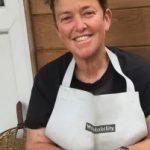
Fiona Sanderson gave a toast in the 2024 Orkney International Science Festival to Dr Beatrice Garvie, who was part of a great tradition of women doctors serving the Orkney community. In addition the many photographs that Dr Garvie took of the people of North Ronaldsay during her time there form a valued part of the island’s heritage.
I imagine that most of you are here today because you have already heard of Beatrice Garvie. The North Ronaldsay Archive has displayed her photographs of life on the island for many years, and Ian Scott has done a great job there.
And the Orkney Library and Archive here in Kirkwall has kept her photograph albums safe for many years, and have more recently digitised a number of the many hundreds of photographs that she took whilst she was a doctor on the island, a few of which you can see on the Archive website, in the ‘Photographers’ section.
Beatrice Thomson has worked with me on captioning around 500 of her photographs, so that we can continue to recognise the names of people and places in them, and working with Beatrice has been an immense pleasure.
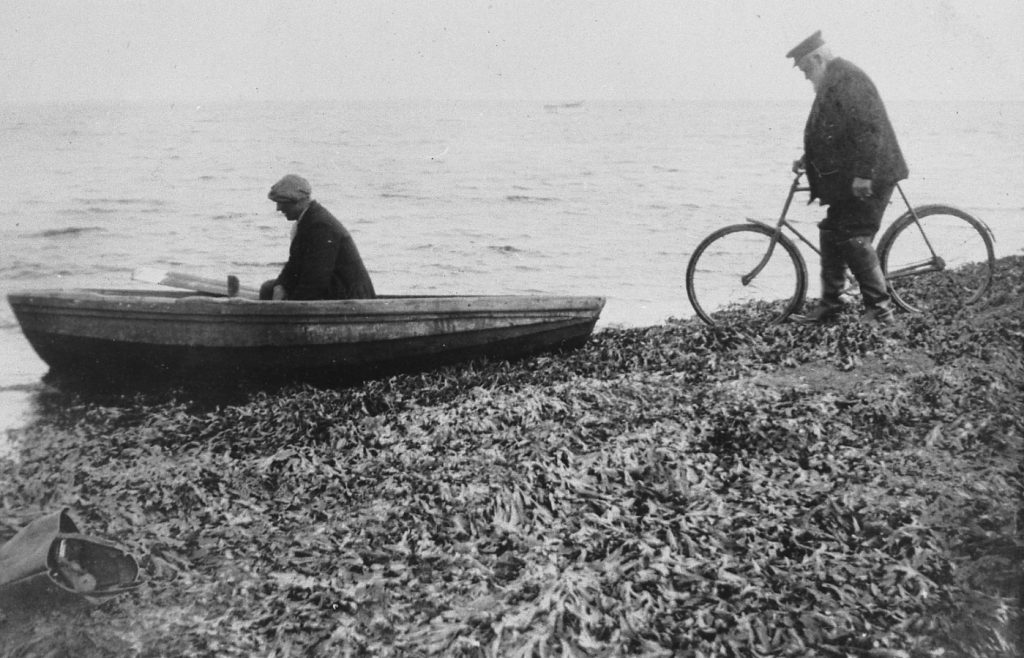
John Tulloch of North Ness (on bicycle) and Tammy of Breckan, see the mailboat out to sea. [D156-259] Image courtesy of Orkney Library and Archive
Full of everyday moments
On the photographs themselves, I will say that it would be hard to find a more comprehensive set of captioned photographs of island life, in the 1930s and ‘40s. Beatrice Garvie was part of the island community for 16 years, and so her pictures are not those of an onlooker in search of the quaint or the romantic. You see men and women at work, at ease with themselves. Families gathered together, children at play. There can’t be many 1930s babies who were photographed by the same person who delivered them!
There are several ways in which her work is very unusual in its time. One of these is that the photographs are natural, seldom posed, and there is no sense of Victorian stiffness about them. They are full of movement. Full of everyday moments. And her eye is superb. She catches natural expressions, and frames her subjects with very strong compositional technique.
From the landing of the first plane in North Ronaldsay, putting up a new roof on the bakery at Trebb, to birthday parties, weddings, the steamer arrival and trips on the post boat, she also captured many kinds of island events too.
Best of all, in my opinion, was that she made sure to give copies of her pictures to the people who were in them. This was far from common practice.
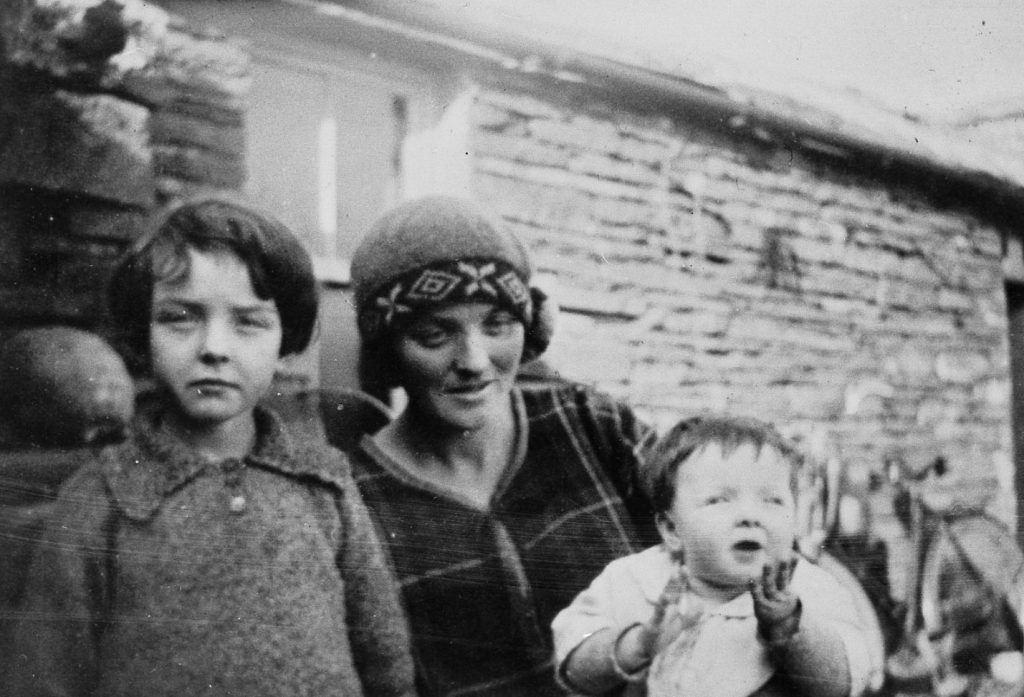
Annie, Jeannie and Sibella Thomson from Neven, North Ronaldsay [D156-292] Image courtesy of Orkney Library and Archive
With camera and bicycle
We know what kind of camera she used, in fact I have one in working condition, and North Ronaldsay islanders have been able to borrow it to take pictures of life on the island now.
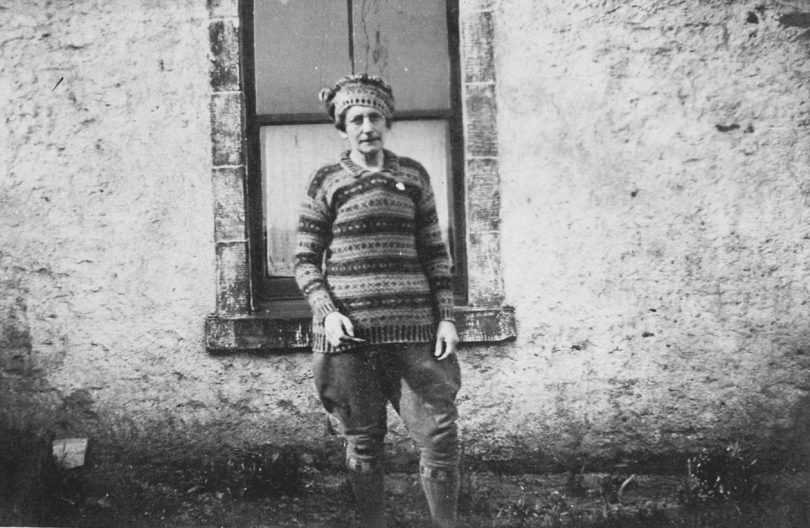
We know that she found her way around the island on a bike, because it is often in the background of her pictures. And we know that her favoured outfits were her wonderful fair isle sweaters, and her jodhpur like trousers. As John Tulloch remembered, in Anne Marwick’s fantastic book North Ronaldsay Voices, ‘She always wore britches, and she smoked like a chimney!’
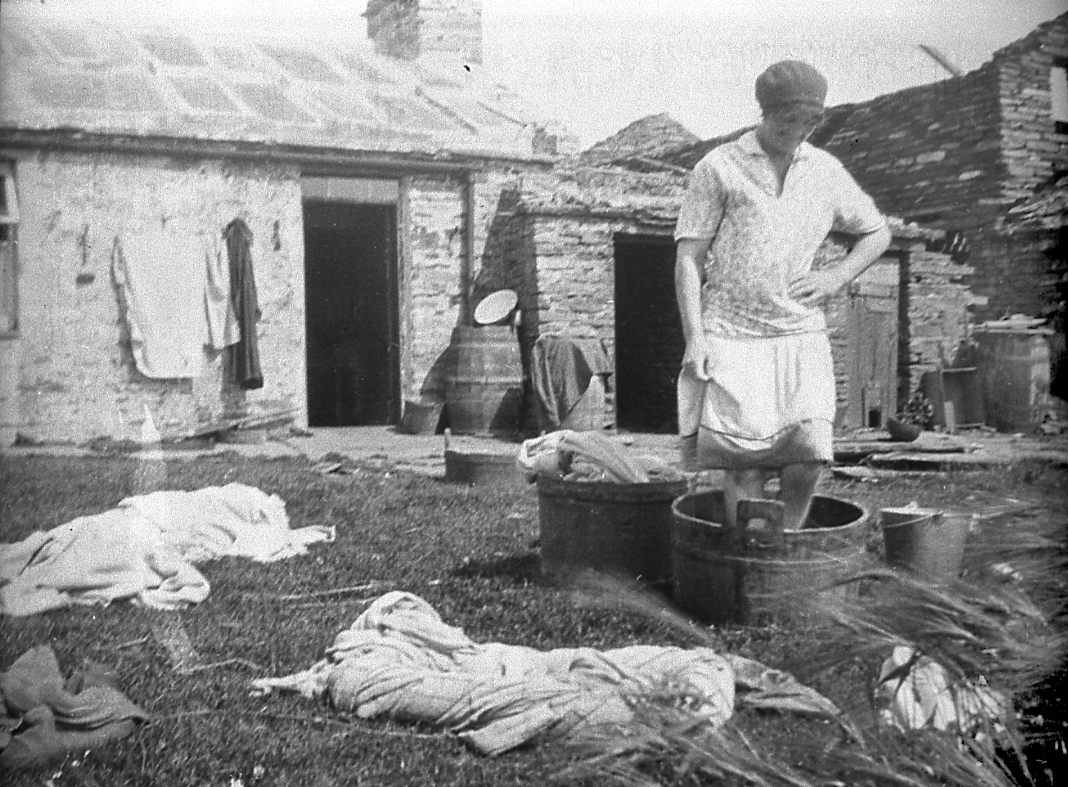
Image: D156/0003 Jenny South Ness tramping the blankets
Image courtesy of Orkney Library and Archive
Student and house surgeon
What else do we know about Beatrice Garvie? She was a very early woman doctor, so early that she qualified before it was possible for a woman to be awarded a degree. Instead she gained what was called a ‘Triple Qualification’. This was in the early 1890s, and that qualification was awarded by the joint colleges of physicians in Edinburgh and Glasgow.
We know that she was born in Perth in 1872, into a middle class family that were stalwarts of the church. And we know that the family, and the church were supportive of her medical studies.
Her first year, as house surgeon at the Samaritans Hospital in Glasgow tells us something more too. Medical posts for women were very few and far between, and to have gained a position here, she had clearly proven herself to be one of the most able in her cohort. We can imagine that she was a strong character to have got that far. During my years of finding out more about Dr Garvie, I was delighted to get to know two of her great nieces, and meet more of their family. “Strong forthright, cantankerous” was how they described their family characteristics. When I visited them, down in England, I was delighted to see that one of them was a talented illustrator, with a considerable eye for strong composition too.
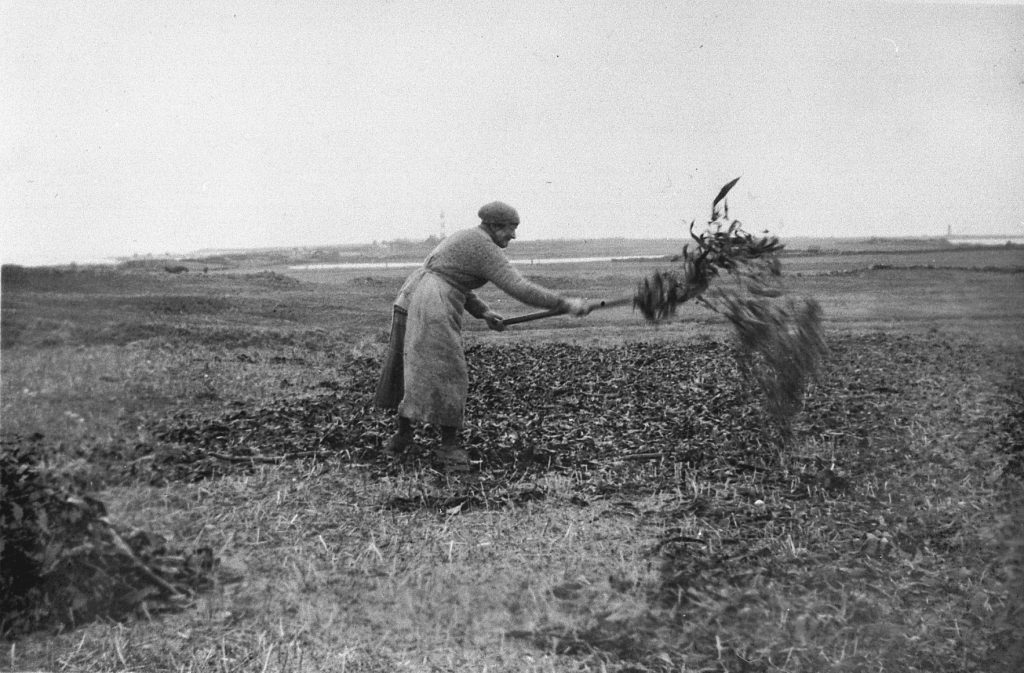
Woman spreading seaweed on the land as manure. The house visible in the distance is Garso [D156-178] Image courtesy of Orkney Library and Archive
Work in public health
I’d also like to share two more bits of my research with you, from different times in her career, which took her as a medical missionary to India, and as a public health officer to Sheffield and Rotherham, to Fife and to Islington, before she finished her career in Orkney. I think that these examples indicate the importance she attached to public health being an entitlement for all.
The first comes from her work as Tuberculosis Officer, after the First World War, when she is struggling to cover the number of patients with tuberculosis that she is visiting at home across a wide area of Yorkshire. She notes that she is only managing to visit the men in the county, returning soldiers after the war, and that many are not at home, in spite of the prearranged appointments to see them. She writes to the council to ask for a clinic, which would save on wasted travelling time and enable her to see the ‘civilian population’, women and children too. Her request is refused. She tries again, and is refused again.
The second comes from her time in India, in 1898, much earlier in her career, when she puts her name to a letter to Parliament, calling for better treatment of ‘contagious disease’, in fact venereal disease, in the returning soldiers from the British Army in India. Previously the ‘Contagious Diseases Act’ had vilified women for spreading these diseases, and the letter to Parliament pointed out the role that men played in spreading the disease.
This letter was countersigned by a fair number of early women doctors, including Elizabeth Blackwell and Elsie Inglis.
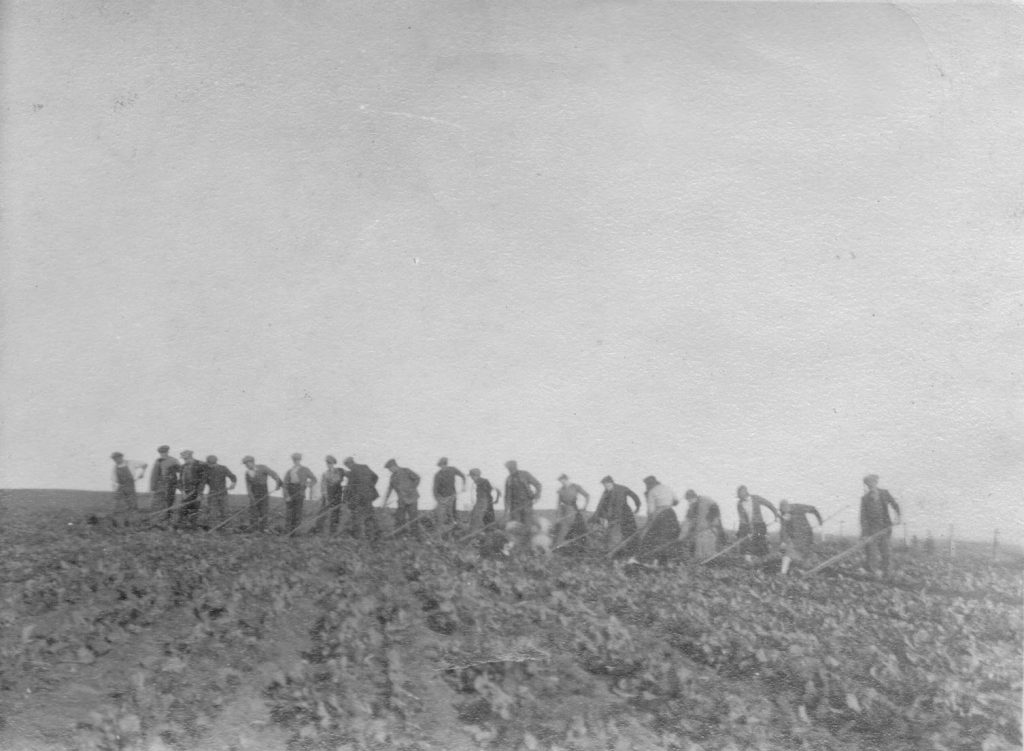
Singling neeps at Holland Farm, North Ronaldsay [D156-427] Image courtesy of Orkney Library and Archive
More than one
Interestingly, another signature on the letter is that of Mary Baird Hannay, who is listed as medical officer for the Orkney Islands of Flotta and Pharay.
Two women doctors involved with Orkney… that might seem a coincidence. Except…
A small group of us have been researching early women doctors in Orkney, and we were astonished to find how many there were.
By the time Beatrice Garvie was arriving to take up her position in North Ronaldsay, there had been over twenty women doctors in Orkney, some of whom worked here for just as long as she did.
More on that another time, but in the meantime, I would love you to join me in celebrating one of the strong, the forthright, the cantankerous, and to raise your glass to Dr Beatrice Garvie.
There is a blog called Finding Dr Garvie and also one for the Orkney Women Doctors Project. Fiona Sanderson’s ongoing work on Dr Garvie was highlighted in an article online by Jenny Brownrigg, exhibitions director at the Glasgow School of Art. An exhibition in the Pier Arts Centre in Stromness, running until 26 April 2025, features Orkney’s Pioneering Women Doctors.