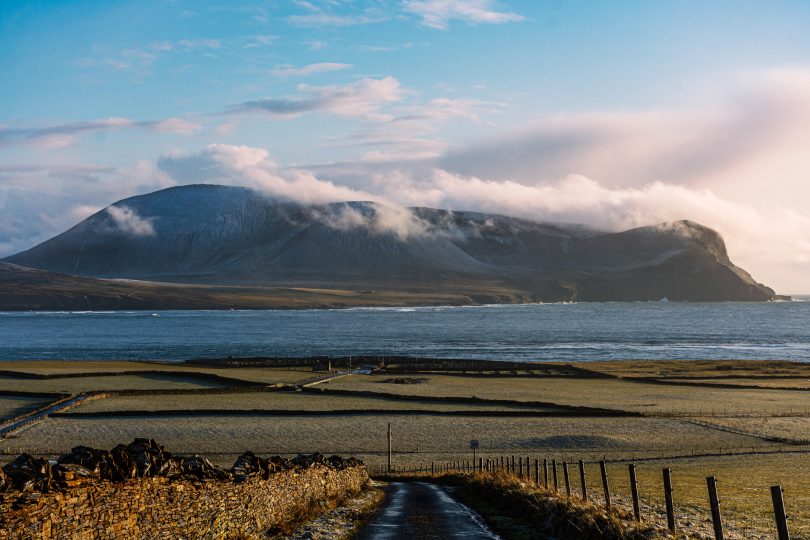

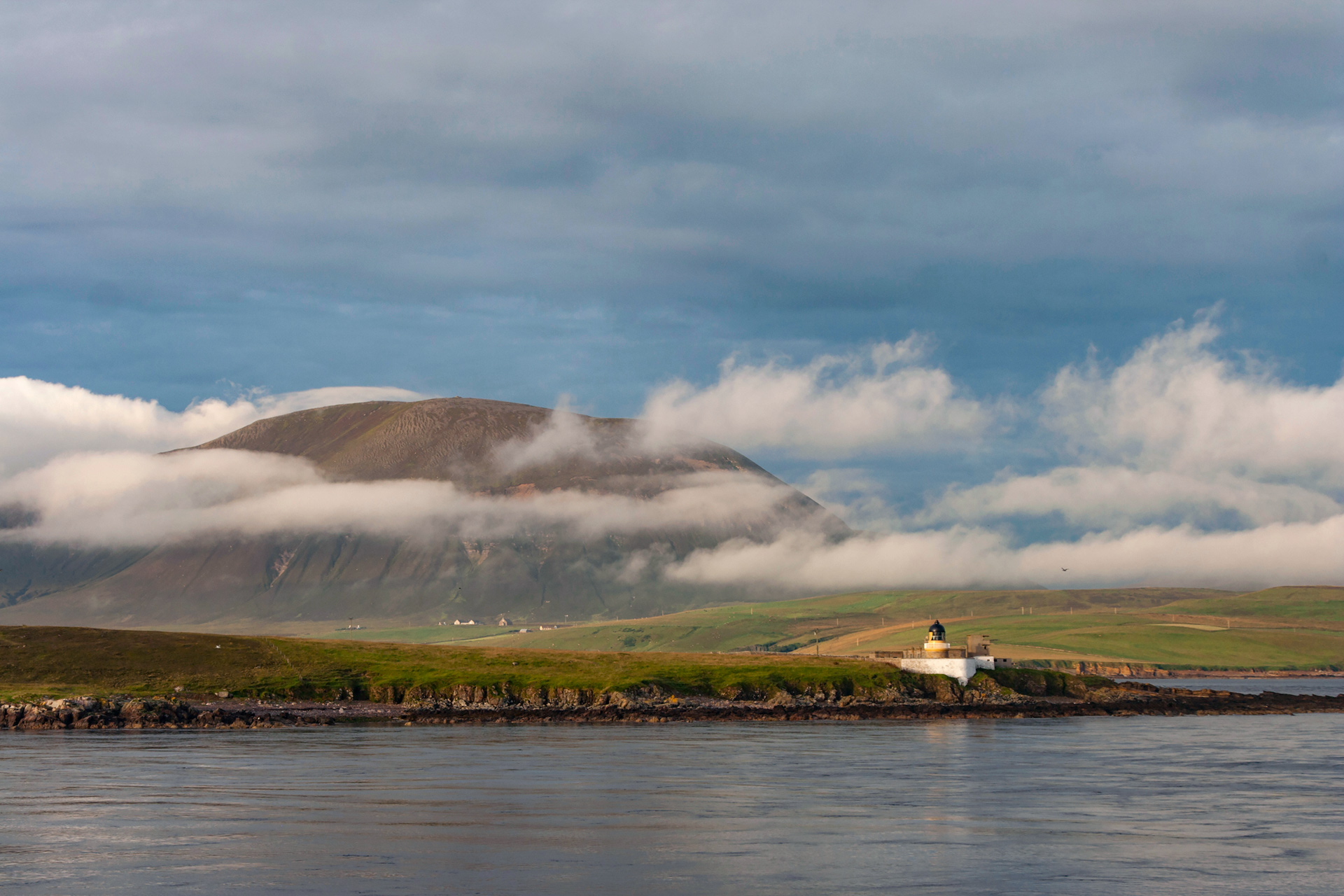
The incoming tide floods down Hoy Sound from the wild Atlantic Ocean beyond. I absorb the familiar scene from days gone by between the shore and the distant blue-hazed hills of Hoy. A shipwreck lie skeletal behind the island of Graemsay, a stark reminder that Hitler’s war reached these Orkney waters with venom a few years before I was born.
In my memory I am listening to the shrill cry of an oystercatcher and staring at an uncanny wriggling body among the seaweed lining the rocks. It is the mid-1950s and I stand, a small freckle-faced seven-year-old, dressed in a home-made frock and summer sandals, gripping the handlebars of my dolls’ pram.
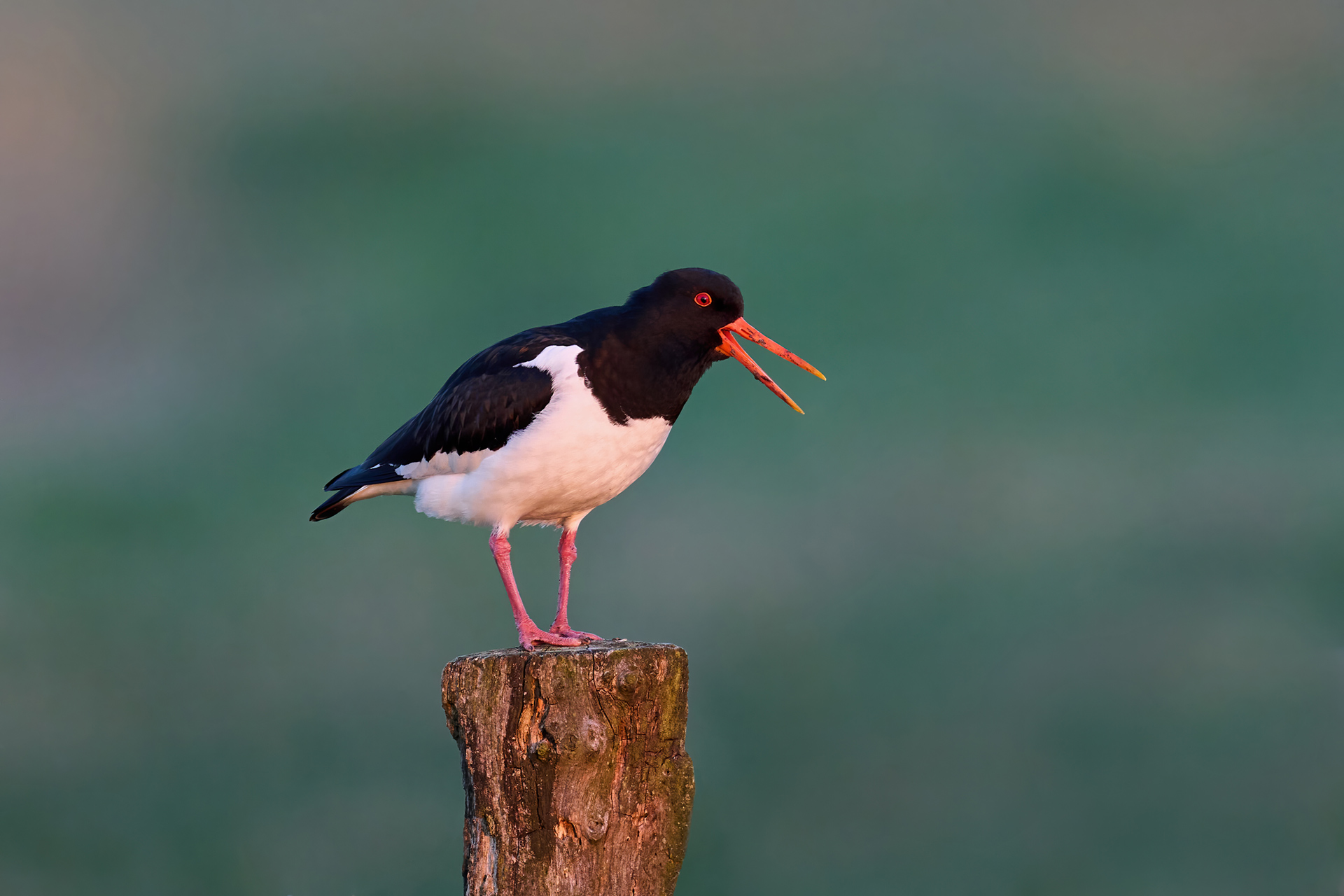
The cries of other seabirds, gull and guillemot, compete for sound waves, but the loudest is the piping sound of a trapped oystercatcher, its black and white plumage writhing to get free of the seaweed enfolding it, its bright orange beak stabbing forth to let out its vibrant cry.
Abandoning my dolls’ pram I decide to get up close to the helpless creature to see if it can be rescued. On close inspection I find it hopelessly entangled among the seaweed, its wings oil-soaked in the shallow watery rock pool.
I hurry home with the seabird wrapped up in blankets in my dolls’ pram, carefully avoiding the interest of other children who I fear might harm it. I navigate the long hill up the street, the oystercatcher still wriggling under blankets.
Whisky and limpets
My mother is wrestling in the kitchen with the family’s weekly wash, her twin-tub machine a must-have for housewives of the 1950s before the luxury of the automatic spinning washing machine was mercifully invented. She is up to her elbows in soap suds as I arrive with the half-dead oystercatcher on a Monday morning in July. Instead of complaining she quickly extracts a half-empty bottle of whisky left over from New Year’s Eve and administers a teaspoonful of the heady liquid to the flapping bird. It reacts rewardingly. Then a thorough cleaning of the oily feathers rids it of some of its suffering and we find a piece of old sacking to bed it down in my father’s cobwebby garden shed.
In memory, I am running home from school along the narrow cobbled streets of Stromness. The pebbled pier-lined shores reach inward at intervals and I am able to collect fresh limpets for my oystercatcher which I have named Piper to mimic his call. He has become my world and the sound of him cracking open the limpet shells is something I treasured and celebrated as he grew stronger each day. He got used to me and in my child’s mind was pleased to see me enter the shed with a bagful of limpets for him. The wild bird and I had a bond of sorts.
The call of the sea
It is now late July, an enchanting Orkney evening radiates its sunset charm across the fields from the Hoy Hills, their impact familiar and wholesome. Piper is now so strong he is able to run around the shed flapping furiously. We know it is time to set him free, feeling a mixture of sadness and relief. My long-suffering mother places him carefully on a fence post, waist high, in the back garden. Piper senses the moment, the open air and the potential for freedom. The smell of the sea is calling him. He practices some balancing and beating of his wings for a few moments and then flutters desperately above us in a heroic effort to fly.
But it is not to last and he plummets back down on the grass. We try a second time and Piper again gives it his best shot. But the brave flapping is not enough for him to get airborne.
My mother gently consoles me that we will try again tomorrow and Piper is restored to the safety and darkness of the shed and his sacking.
My last memory captures a white baby’s formula milk tin bobbing gently out to sea on the waves of Hoy Sound. Oystercatchers and other seabirds make their cries noticeably loud and clear but it isn’t Piper’s calling. Inside the bobbing tin on the waves lies his lifeless body. Piper gave up his spirit the same night he failed to fly free. Tears roll down my face at the loss. It seemed so clear that when his hope had gone, he gave up the fight for life. There seems a powerful message there. Today I thank God for my wonderful parents who gave their all to enable and encourage me to care for lost but living creatures and for their memories.