
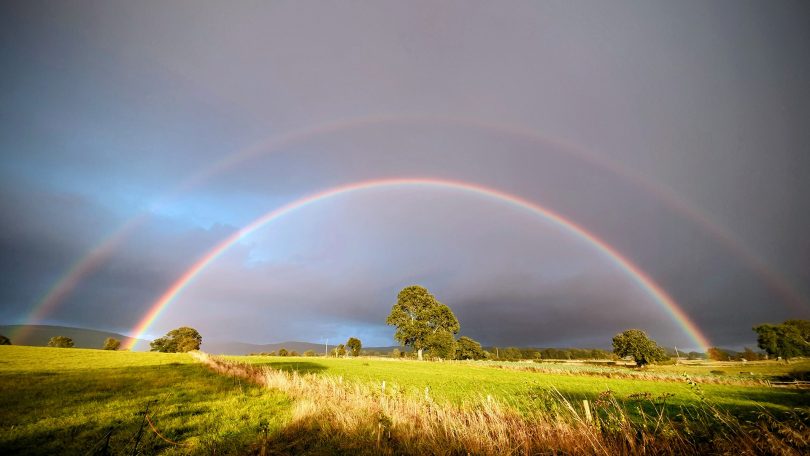

I tried to begin with a theory. But when I look at the land — when I am with it — theory falls away. It is a living being, and I want the best for it. I want it to thrive. And, as with all relationships with living beings, I am learning that my relationship with land is complicated. I want it to be strong and resilient, able to withstand whatever the climate and environment throw at it.
I came into management of a 2.5-acre field in early 2024 and was compelled to put the hedges back in, because that’s what I grew up with: fields edged by hedges. Step one: hedges — windbreaks, living corridors and shelter belts for wren, vole and ladybird.
“The land” shouldn’t be a noun but a relational verb — a dynamic procession of living and dying, decomposition and rebirth. How I respond to the land needs to encompass all of this.
Much contemporary land management is framed in dominant narratives and systems often acting as if it is a choice between control and abandonment — productivity or rewilding — leaving little room for relational, adaptive overseeing.
With land today there are approaches that range from total rewilding, such as the Knepp Estate in the south of England, where a fence was put around the whole property and it was left largely alone for twenty years. This became a model of rewilding, with the later introduction of large, domesticated herbivores to mimic ecological processes.
I am not comfortable with rewilding when it takes humans out of the picture. For those twenty years the land was allowed to do as it wished, undisturbed. How wonderful it is to see what nature can do, how it can repair and restore without us — and yet, we are part of the natural world.
At another point on the land-relationship spectrum are friends who have cultivated their land, removing lawns to become fully productive with orchards, polytunnels, vegetable gardens and areas where wildlife can thrive — relatively, though not entirely, undisturbed.
What interests me is not which approach is right, but what each one assumes about the role of humans. In many policy and funding contexts, land is treated either as a system to be optimised or a process from which people should withdraw. Both positions struggle with uncertainty — and with the slow, relational knowledge that comes from staying with land over time.
I took this land, which had been a sheep pasture, and began creating a mosaic of microhabitats. A seven-by-seven-metre pond went in in January 2025. Micro-woods were planted last year: silver birch, rowan, crab apple and guelder rose. Home-grafted and local-variety apple trees were planted near the old crab apple, which hardly fruits now, a tangle of wild branches, its trunk scratched and scoured by rabbits. Then came a small patch of potatoes — the first step towards food for us — but rabbits or hares quickly dug them up for a raw feast.
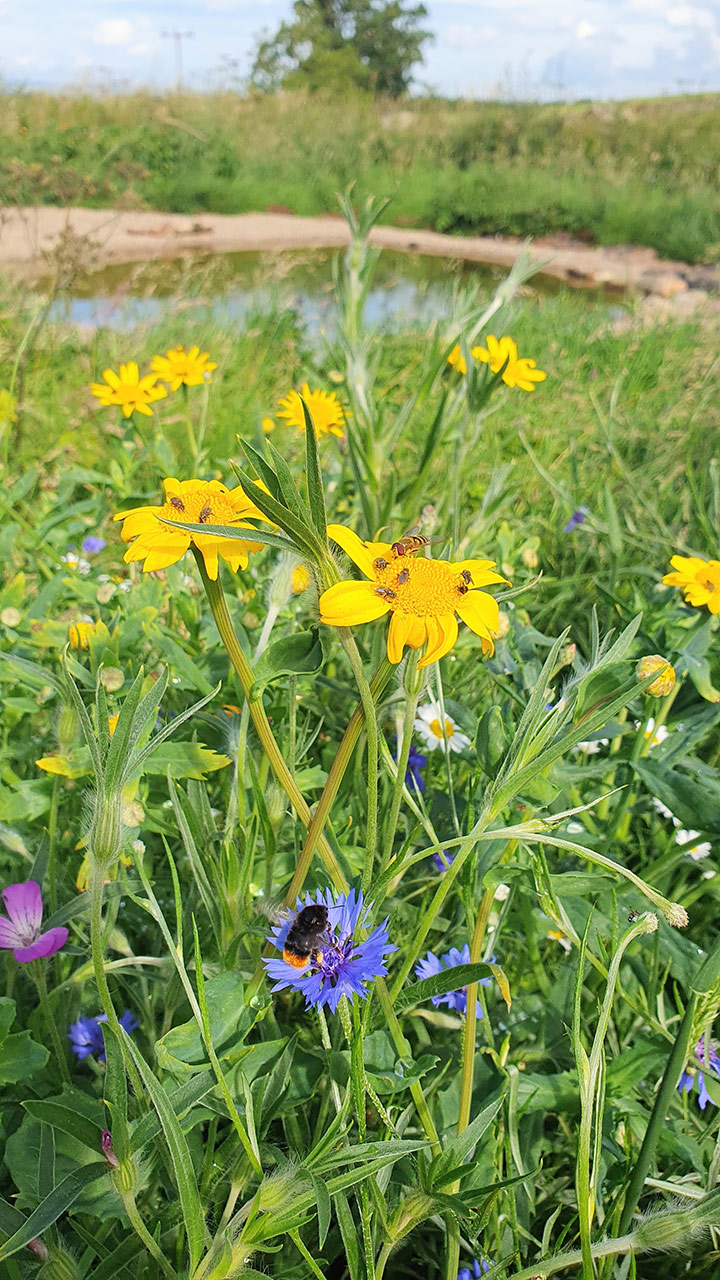
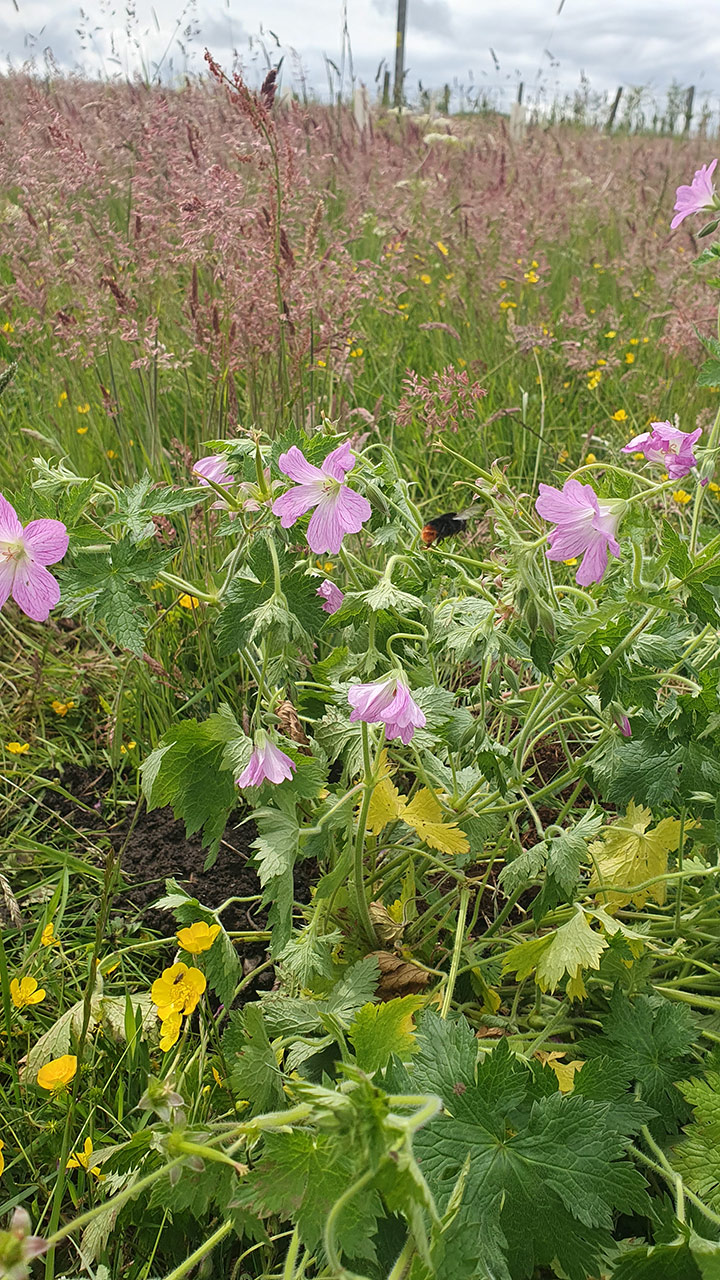
Around the pond, garden orphans looking for a home took root: geranium, astrantia and comfrey, alongside a bank of annual wildflowers and a green manure spread of phacelia. I realised here that there are no rules, only observation, experiment, and listening with all senses to a living body.
I look at the plants on the land, and the land itself, as a living being. A healthy relationship includes listening to the other — not controlling outcomes with a tight fist of expectation, but standing back, listening deeply, and responding authentically and dynamically.
Throughout this journey, advice has been freely offered: glyphosate before planting any trees, the grass will stunt them; make sure grass doesn’t grow near trees as it will outcompete them; don’t plant trees, that’s valuable pasture; plant the whole thing as an orchard or woodland.
So instead, I decided to get to know the land.
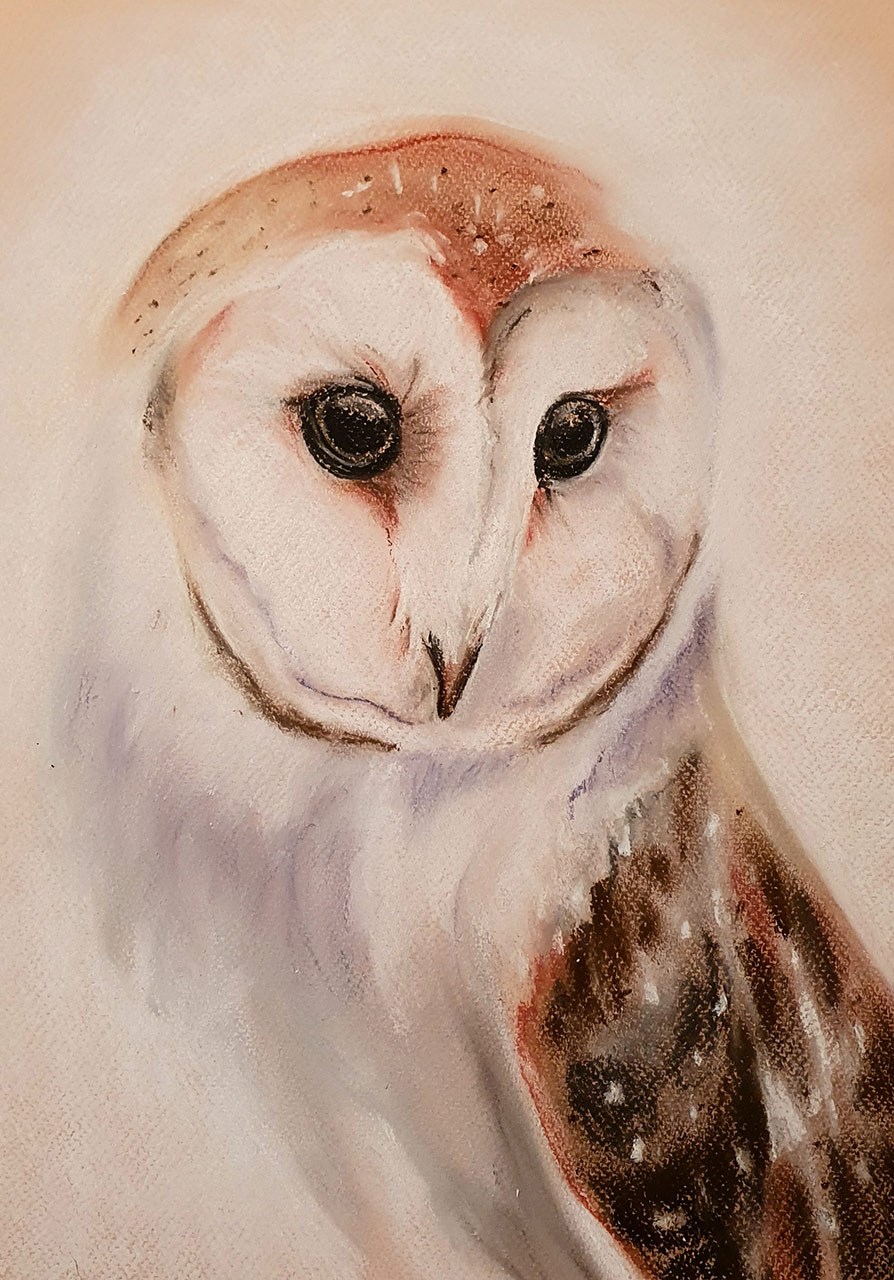
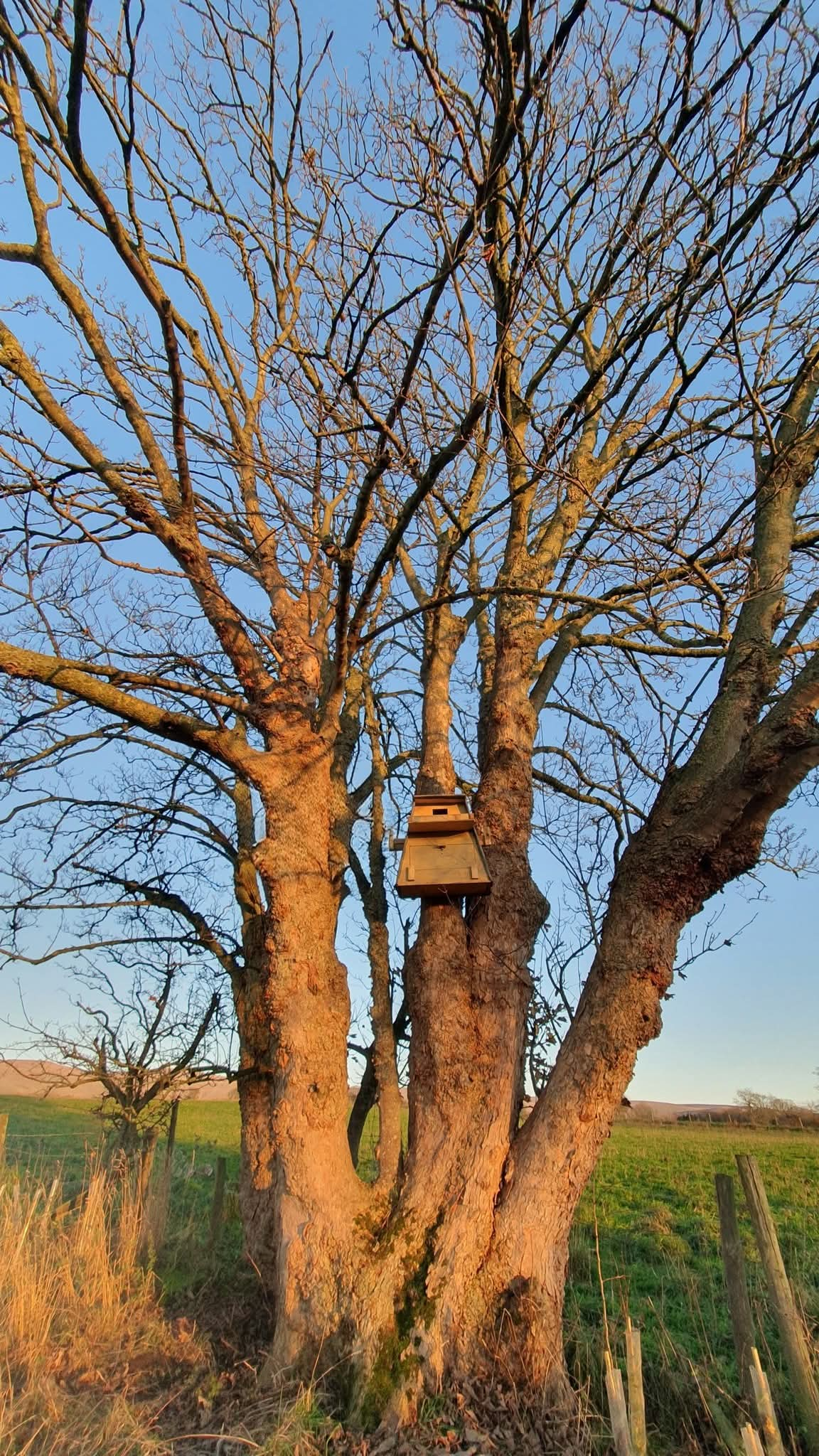
Where the grass grew long, it became a vole’s paradise, and last year these furry meals on paws drew in a barn owl. In response, a barn owl nest box went up in the one standing mature tree — a sycamore shaped by being laid as a hedge many years ago, now a queen, gently rotting, with a few dead limbs. This year, beneath that long grass, I discovered acorns sprouting into young oaks — likely brought in by jays or voles, the nearest oak a field away.
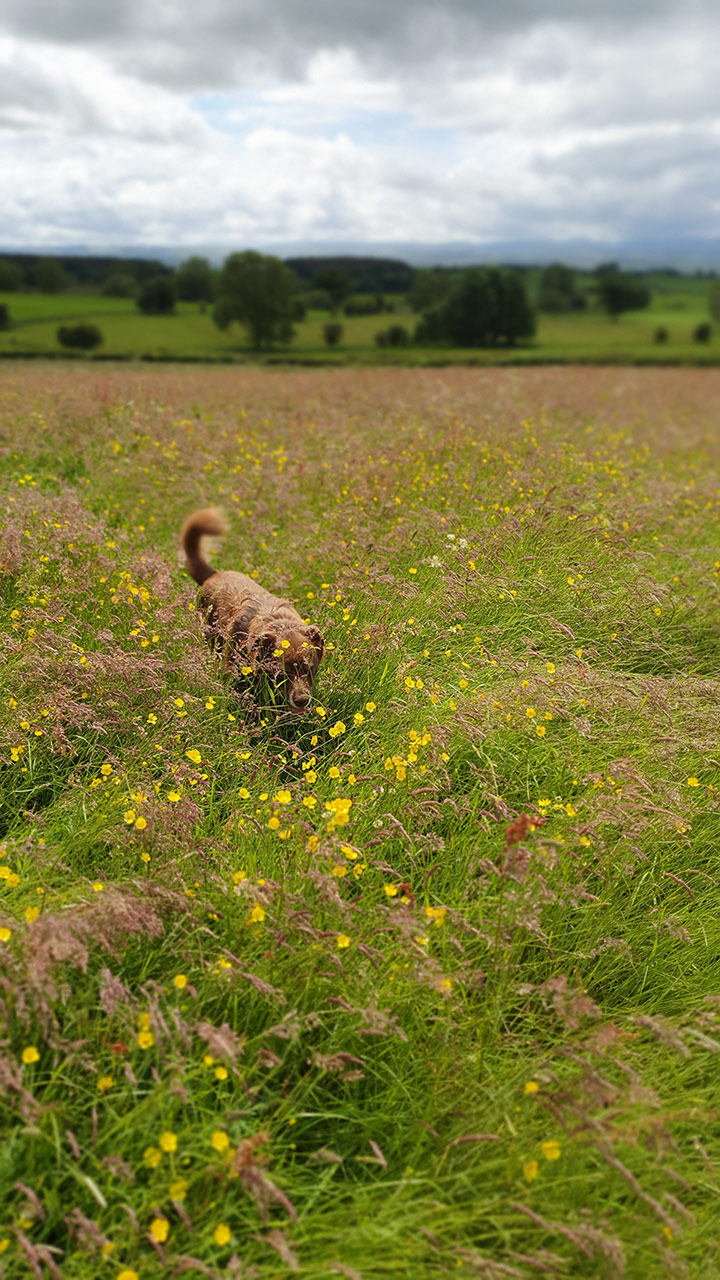
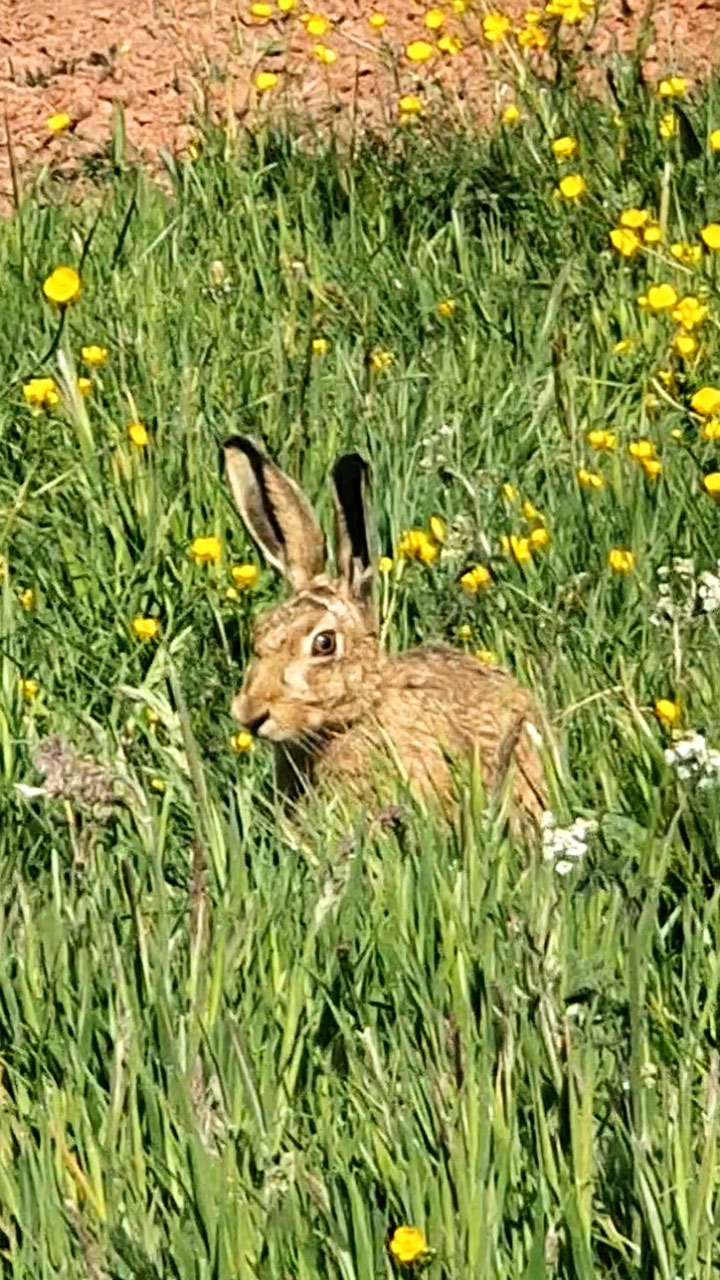
A frog has taken up residence in the pond, and a heron now makes regular fly-bys, prompting me to add more stones as cover and habitat to shelter the frogs. Hares use newly planted plug plants as a breakfast bar, particularly favouring dog-eyed daisy roots. Rabbit burrows are so large they undermine newly planted trees and open holes everywhere. The dog has taken a few out of the system, and after learning how to gut, skin and quarter a rabbit on YouTube, I created a cider slow-cooker recipe for it.
Until now, the long meadow grass has been cut each year by a local farmer who takes it for silage for his beef cattle, as very few farmers make hay these days. With a changing climate, there is no longer a predictable ‘good week’ or two of sunshine for hay to dry and be gathered. I remember helping with haymaking as a child — the sweet smell of vernal grass, the nervous days after stacking, hoping the bales weren’t packed too tight to start a fire as heat built under the dusty, filtered sunlight of the barn.
This year, I won’t have the grass cut by machine. I will leave it standing and bring the herbivore’s voice in. Once the seeds have dropped, they are welcome to mob graze. As a smallholder without access to Belted Galloways or Longhorns like some larger estates, I am working with another local smallholder who has Hebridean sheep. Twelve will come on and eat the grass down. They are currently in lamb, and as payment for the grazing, I will receive lamb to eat.
My parents moved here to live off the land, but couldn’t do it, because they couldn’t eat the lambs. I will see how I fare.
I’m learning to live with my mistakes, which sometimes offer great rewards — oak trees, voles, owls. Other times, there is failure: the long-drop compost toilet that revealed floating logs as the water table rose. That has now been filled in. Or letting sheep onto all the land rather than mob grazing, which led to compaction, bare ground and surface water runoff. This year will see more selective grazing.
But this is a relationship, not a transaction. It’s about staying, being with uncertainty, and responding in co-creation.
The question is not whether this way of working scales neatly, but whether our institutions are able to recognise and value forms of knowledge that emerge through long-term attention, responsiveness, and care.
If land is understood not as a static asset but as a living relationship, then stewardship becomes less about implementing plans and more about cultivating the capacity to respond. That may be uncomfortable — but under conditions of climatic and ecological uncertainty, it may also be essential.


