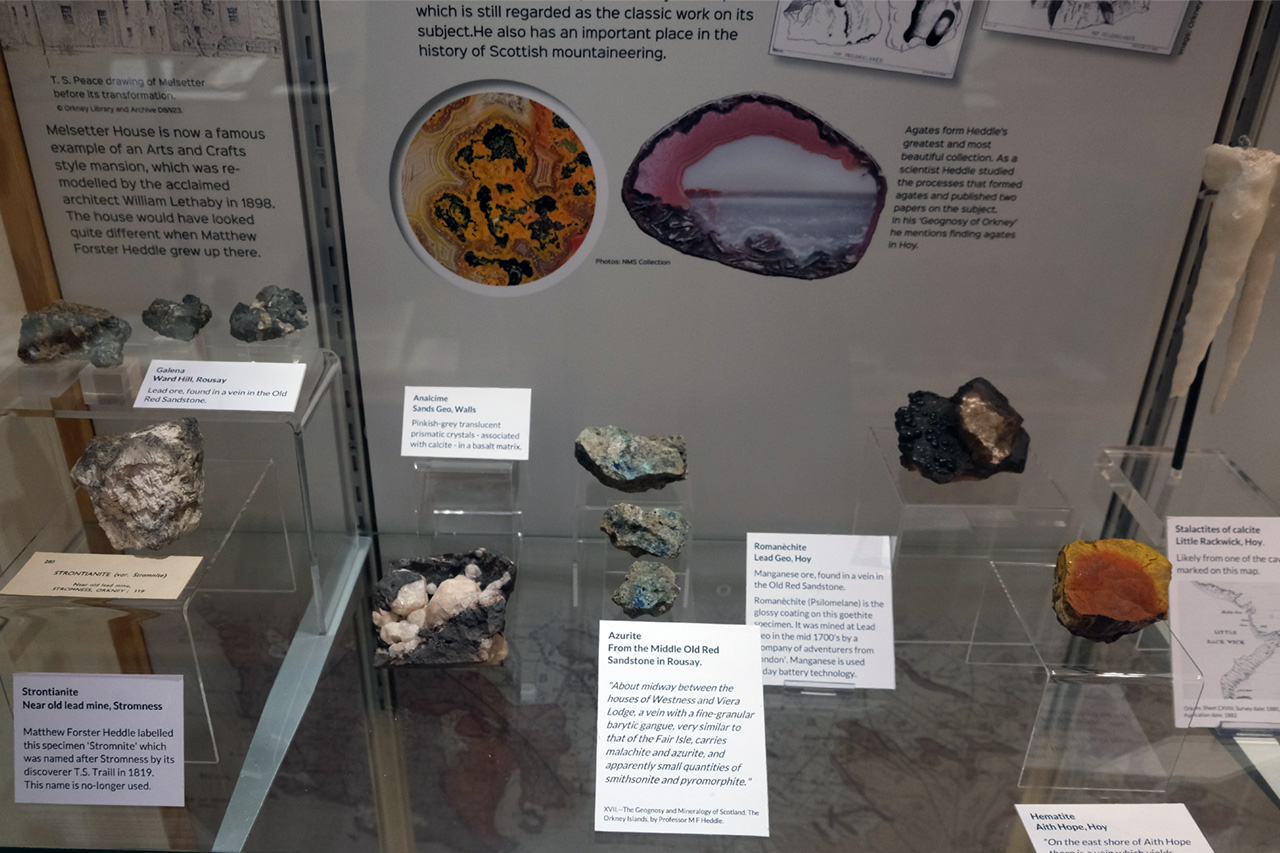
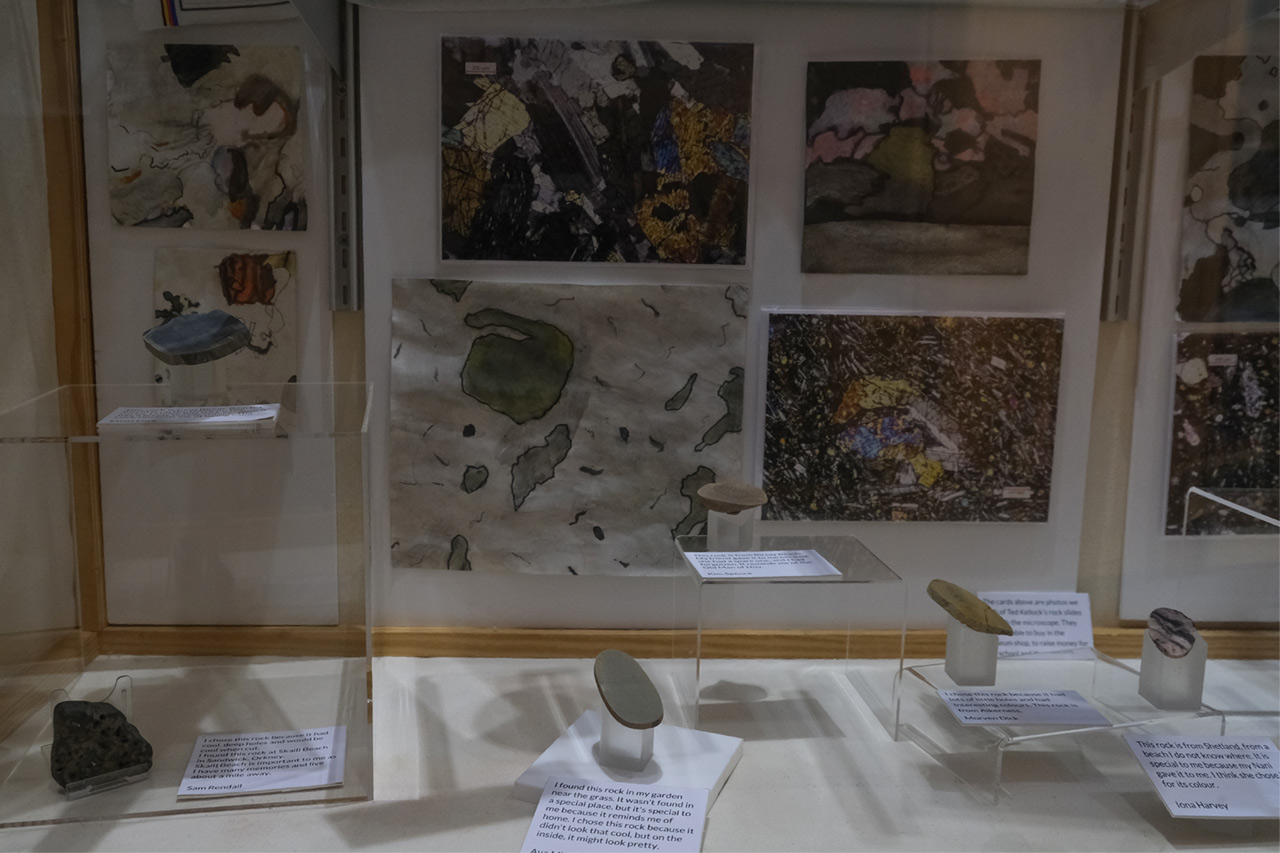
This year’s Stromness Museum summer exhibition is a delight for everyone with an interest in Orkney’s rocks and landscape and the people who have probed deeper into them. It celebrates the work of two geologists who lived in Orkney – Ted Kellock whose rock slide collection is looked after at the Museum, and Scotland’s greatest mineralogist, Matthew Forster Heddle, who was born and brought up in Hoy. Katy Firth, who has been coordinating a year-long geology project for the museum, has been telling us how it came about.
It’s the result of a huge team and network of people. Firstly, if it were not for the late John Flett Brown, I may not have been encouraged to delve deeper into Ted Kellock’s rock slide collection. John is a huge miss to us and we are very sad he’s not here to see this exhibition.”
With input from John Faithful at the Hunterian Museum, who enthused about how beautiful the slides would look under the right microscope, Katy began making connections and so a project idea was sparked. It’s thanks to him that Stromness Museum has a state-of-the-art microscope with which to photograph the slides, she says, and the exhibition itself was made possible by funding from the Quekett Microscopical Club – the leading international organisation for all light microscopists, amateur and professional – who shared the interest in Ted Kellock’s slides. A chance visit by a member of the club resulted in a year’s funding for her to work one day a week with a team of volunteers.
The museum would like to express our utmost gratitude to Peder Aspen, Barry Squires, Colin Krumdieck, Ruairidh McCallum, Kim Quick, Rebecca Braddock, Kyle Adam, Colin Macaldowie and Gwyd Williams. Getting 4,301 slides scanned and transcribed is a huge undertaking. The museum is in the process of having the newly transcribed catalogue uploaded to their website and are now working on photographing the Orkney slides.”
The mineralogist Matthew Forster Heddle
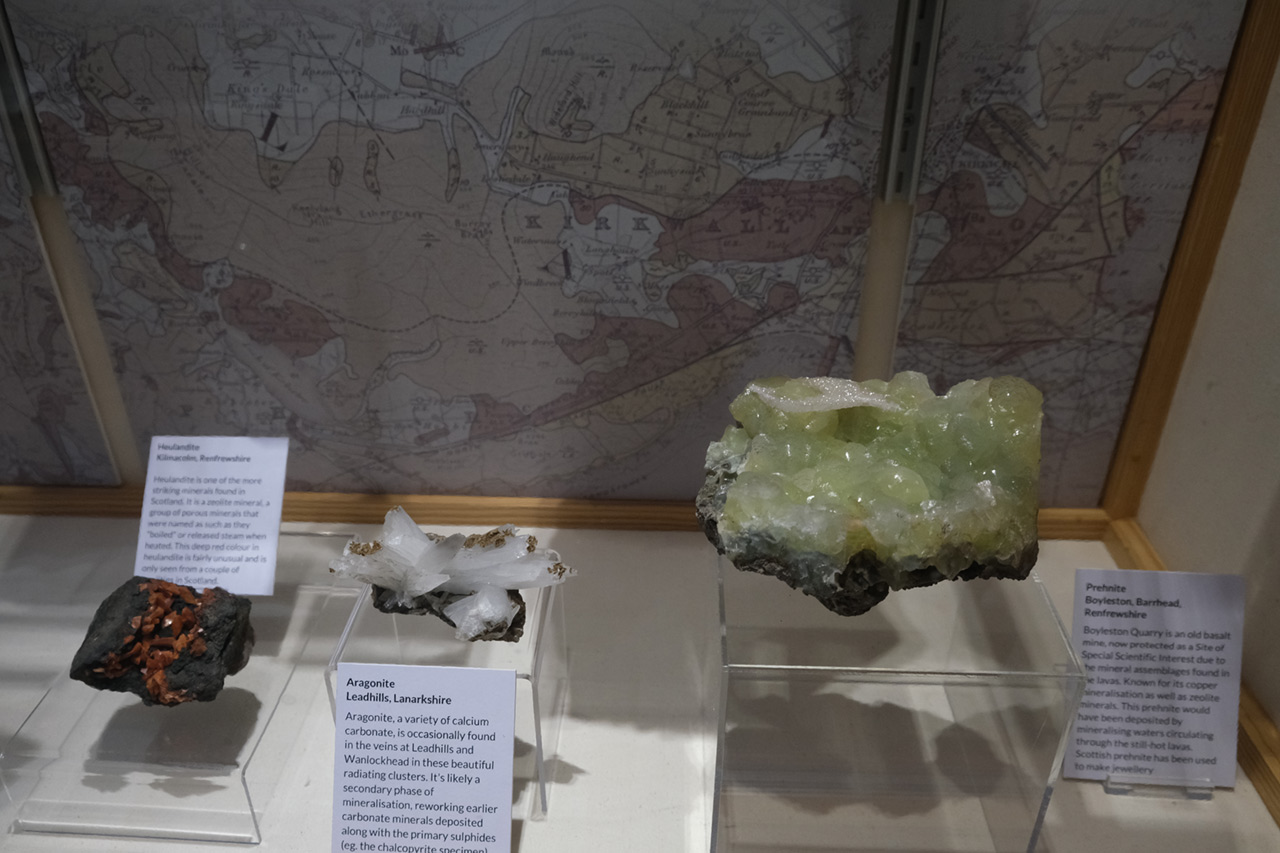
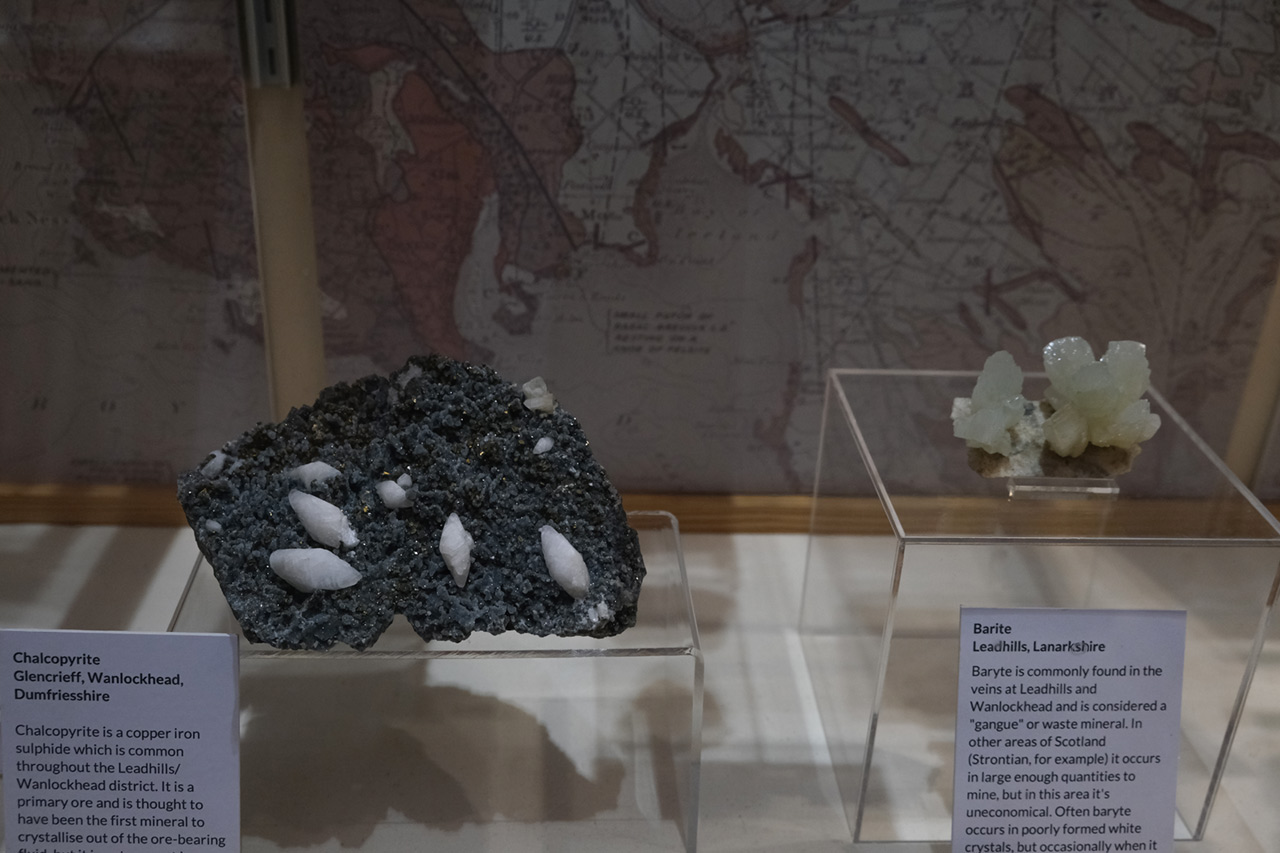
But would an exhibition that was purely about microscope slides have sufficient mass appeal? By good fortune, an idea had been planted some years previously by a visit to the mineralogy section of the National Museum of Scotland in Edinburgh. John Faithful had introduced her to the name Matthew Forster Heddle in her first few months of starting at Stromness Museum. On visiting the National Museum in 2019, she realised it held a huge collection of his specimens and hoped someday to borrow some for an exhibition.
This year, that opportunity came. Thanks to a grant from the Royal Society, the loan costs have been covered. This is the first time this collection has been exhibited in Heddle’s homeland. There are specimens named after Stromness and even the Orkney Natural History Society’s founding president Rev. Dr Charles Clouston, whom Heddle greatly admired. Hamish Johnston, Heddle’s great-great-grandson, has been helping with the exhibition and he has recorded an online talk which is available on the Science Festival YouTube channel. Hamish also made a visit up to Orkney to see the exhibition this summer and met with museum staff.
Dounby Primary School
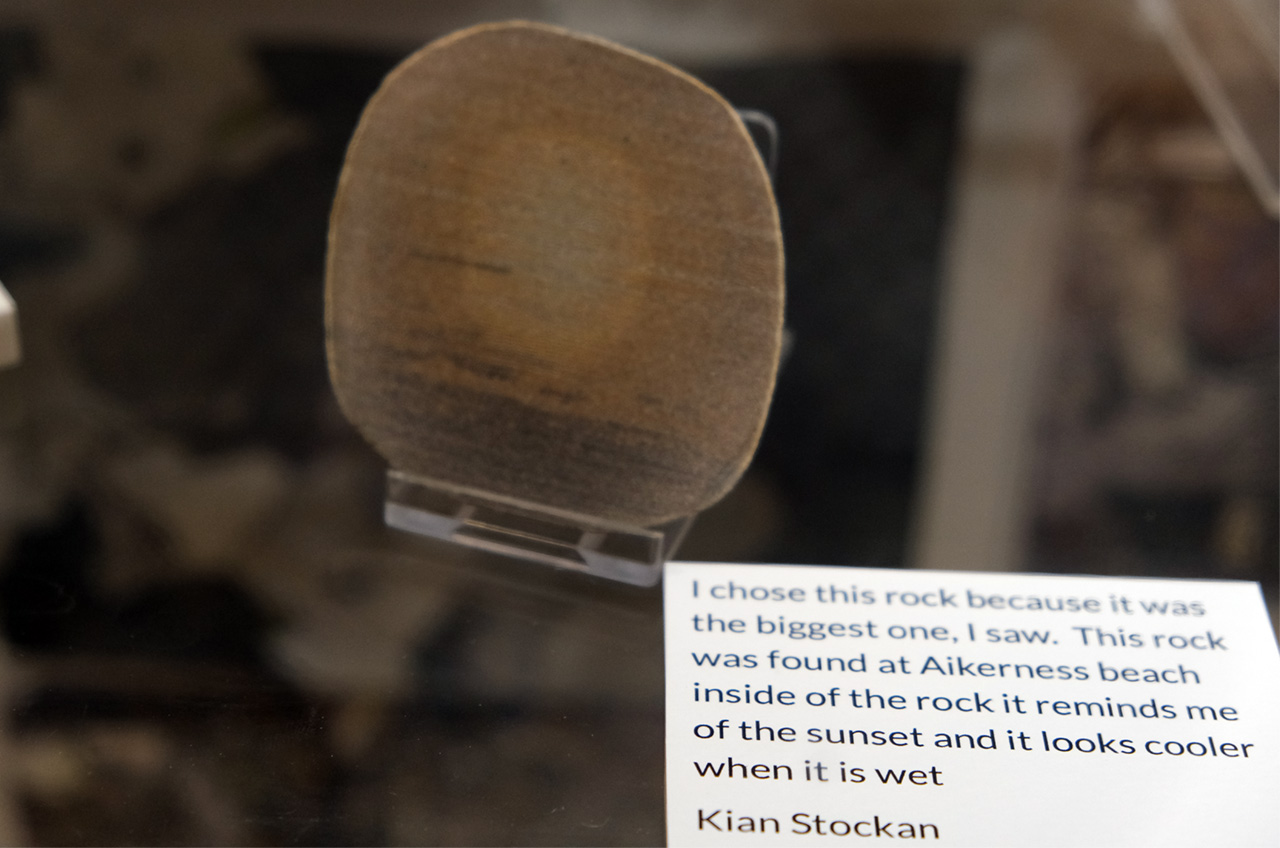
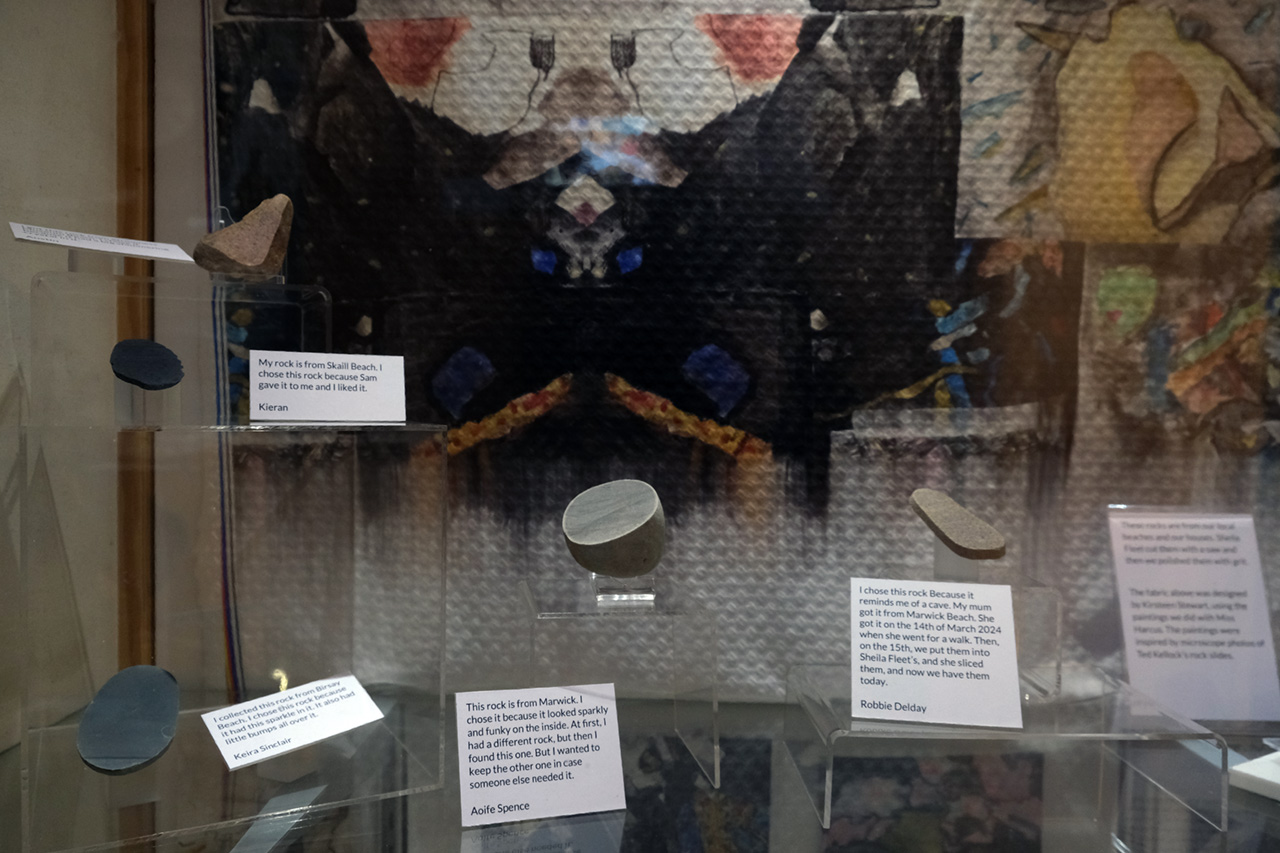
The final part of the project is the one which Katy feels was most rewarding – a collaboration with Dounby Primary School. With input from Museums Galleries Scotland, Developing the Young Workforce, textile designer Kirsteen Stewart and jewellery designer Sheila Fleet, the Primary 6 and 7 pupils from Dounby co-curated the exhibition. They produced a short film with training in film production from Martin Laird; it gives a detailed picture of their project, with its lover all aim to develop skills used in museums, as Katy explains.
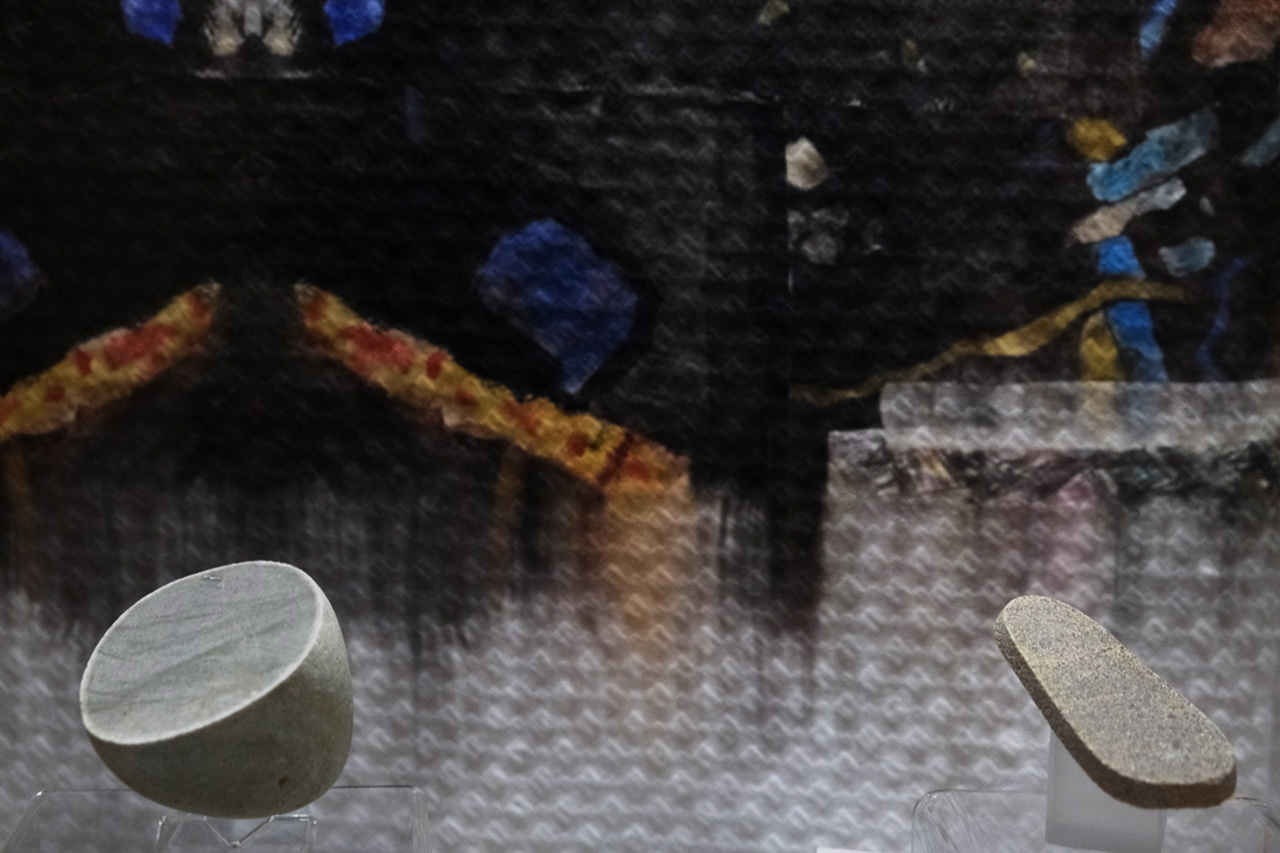
They have been working with us to learn cataloguing, digitising and microscope photography skills, with some retail and exhibitions design thrown in. They’ve been working with creative people to learn about their crafts and passions, polishing rocks which they chose (and Sheila Fleet cut) and designing fabric with Kirsteen Stewart. Even their art teacher Eilidh got the microscope slide bug. Huge thanks to the pupils and staff for their commitment and enthusiasm.”
Katy Firth has been working for Stromness Museum for several years on exhibitions, outreach, and climate change activities, with projects ranging from online panoramas to snorkel safaris, and she is a keen subaqua diver and underwater hockey player. With a degree from Glasgow University in Archaeology and German, she worked for the British Council as a language assistant in Munich for a year before taking up a series of posts and freelance work in archaeology and heritage in England and central Scotland. She has now been appointed Education Officer for the Ness of Brodgar Trust.