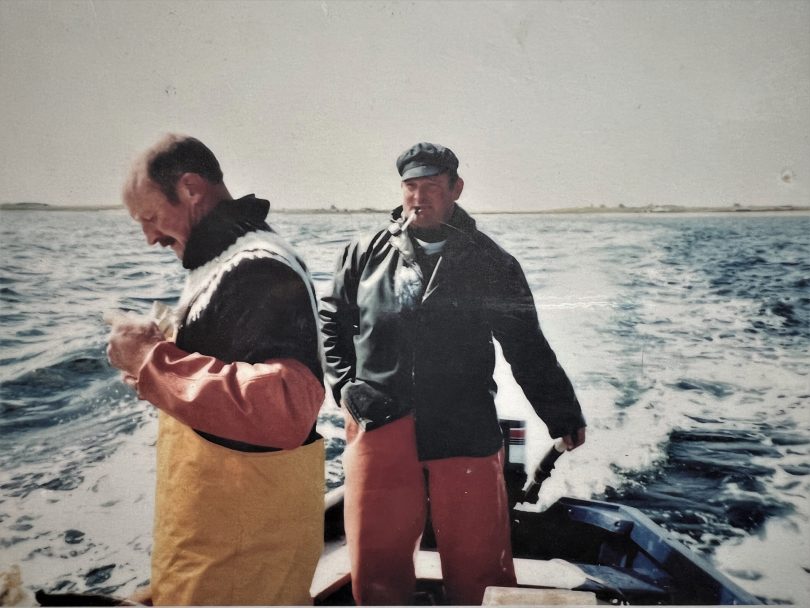

This year’s publication of Ian Scott’s A Letter from North Ronaldsay 1990-1999 has been keenly awaited, with the first decade of his occasional columns in The Orcadian. The appendix contains memories of traditional lobster fishing, out in a twenty-foot open boat, a North Ronaldsay praam, in seas exposed to the power of wind and tide, as this extract describes.
I should mention one other frightening episode when working, this time in the Mary Jane. We were coming round Kirk Taing and Dennis Taing, having completed our creel work on the north side, and were on our homeward journey. The wind was in the north and strengthening more and faster than we anticipated. It was blowing in the face of the ebb tide which was ‘making up’ running north and getting more powerful by the minute. Even with our 25 hp engine our progress seemed slow, and as the ebb increased in strength so the sea began to become quite dangerous with over-falls breaking in great, high upheavals of water here and there. Any particularly dangerous-looking wavetops we had to momentarily turn and face, as one break would have been a barrel or more of water which would have half-filled the boat.
With each safety manoeuvre we made, the boat of course lost headway going backwards with the tide. This frightening passage took quite a long time as the ebb tide increased in velocity, with the lumps of water breaking ever more frequently and becoming higher and higher. After what seemed a very long, somewhat frightening battle – prolonged by evasive action, first losing ground with the tide, then back again against the tide in our effort to get clear of the ebb – we finally got out of a situation that, for me at least, took some time to overcome, with a certain weakness at the knees and time to regain my composure. I think we both felt mightily relieved at our escape.
But let me continue by recalling some of the special memories, wonderful scenes and less pleasant times too, all of which make the fishing days part of that magic I mentioned at the beginning of my account. There were the days in the ‘croon o summer’ when it could be very warm on the sea – even when the salty breezes blew. On such days, my early days with the old Seagull outboard, and after hours of work, it was hard to keep one’s eyes open during the long, slowish trips from one area to another. I’m thinking especially of the few times when we would be hauling creels at the Riff (Reef Dyke), and then having to motor over five miles round the north of the island, then west to the ‘holes of the Grey-stane’ (special inshore creel sets). I can still almost feel the heat of the sun, visualise the blue of the sea, with the blinding flash of the sun’s reflections, flick, flick, flickering every second on the broken sea surface. That, combined with the constant hum of the outboard motor, had an almost hypnotising effect.

Of sea and sky and seabirds crying
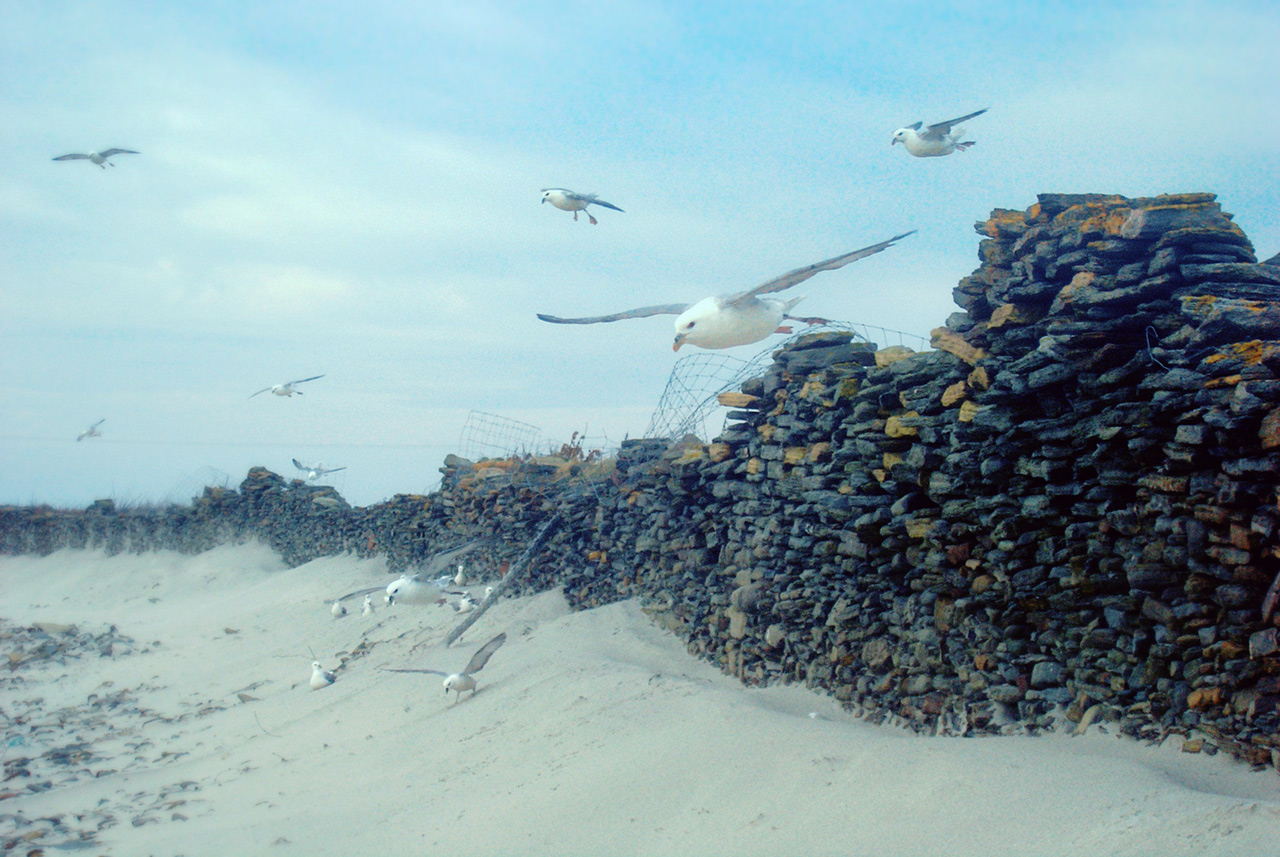
But there was also the comfort and enjoyment of those sunny days, and many others extending over the years: time between hauling creels to watch the great panorama of sea and sky; time for discourse, with talk about this and that; stories told; the sound of the crying birds and the sight of hundreds of calling kittiwakes (‘kittiwhakoes’) and terns (‘pickie-ternos’), rising in white clouds and wheeling away from Selkie Skerry, the Green Skerry, or Summer Ayre; the sight of the ‘solans’ sailing past in the sky, out at the ‘Riff Dyke’ or at the back o’ the skerry or at the North Breed; of seeing them sometimes diving suddenly, like a falling stone, for fish and plunging underwater in spectacular form.
Add to that the occasional appearance of puffins, skuas, stormy petrels and guillemots – and who can ever forget the flight of the common fulmar, with its streamlined body, forever gliding and skimming over the waves. Away they would go up in the sky with wings hardly ever moving, and then in a long, lazy, controlled sweep, back they would come without a single word out of their heads, banking this way, that way, forever riding the air waves and following their destiny.
And the rising of the moon
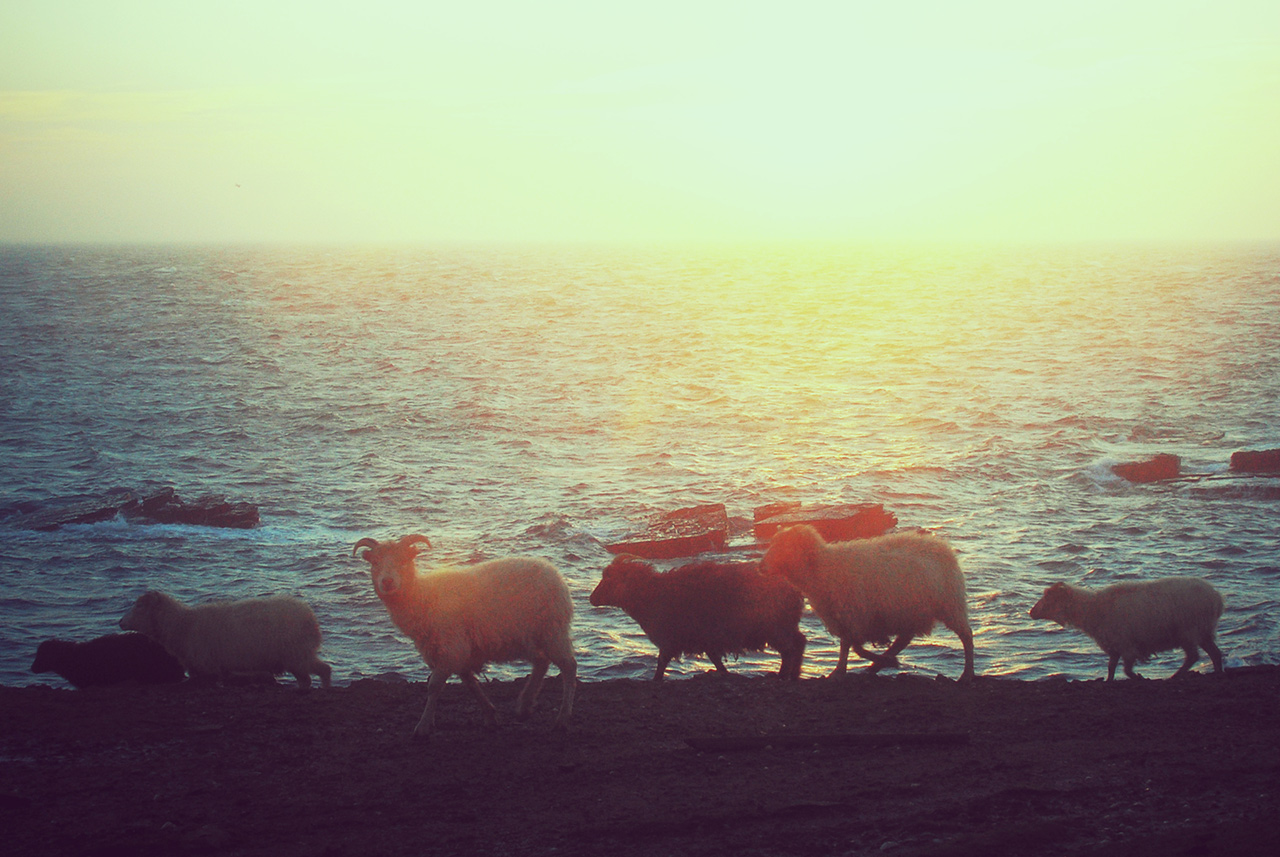
As I think and write, I can remember those days so very clearly. Who, for instance, has seen a thunder-plumb or pelts of hail at sea? The grey surface of the sea jumps in every square inch or less, and the cascading sound rattles the very air. Spectacular too are the great arcs of rainbows that often appear – sometimes two or three – in passing showers, and even the little boat-rainbows seen when the sun reflects through the bow or stern spray as the praam goes clipping and slapping along; seals playful and curious but guilty too of making a ‘peswisp’ (a bad tangle) of inshore ropes when they have nothing else to do; ‘paalos’ (porpoises) flashing through the water and maybe a huge basking shark slowly passing by with quiet deliberation. And then there were the times when the moon rose, amber-coloured or ghostly white in the eastern sky, and times when her ever-brightening light would transform the boat’s homeward journey into that of a magical experience. On such nights, and others too as it got darker, little sparkles of greenish phosphorescence might be seen on cuithes, creels, ropes or whatever.
And what about the days when the sea is up, working within a stone’s throw of land breaks. Watching great waves rearing ever higher, cannoning landward and exploding in huge expanses of white foam, and sometimes, when viewed from the side, seeing the long tunnel which appears, for a second or two, before the wave finally turns over and breaks. At the ‘back’ (the seaward side of Seal Skerry) when hauling creels from some of our deepest worked waters – ten or fifteen fathom or more – in heavy weather, rare sights are to be seen. Often in the huge swells, the praams seem to be from time to time in great, deep, watery valleys, with nothing to see but the sky and the sea. The land and the tall New Lighthouse easily disappear in the deep swells as the powerful waves go heaving ever higher, thundering towards the skerry. And when, in such conditions, stream flood or ebb comes in with a strengthening wind in either’s face – well, then indeed, one sees the full power and majesty of the sea and knows that to be there in an open boat, by unintentioned chance or engine failure, both men and boat would disappear in an absolute maelstrom of fearful destruction.
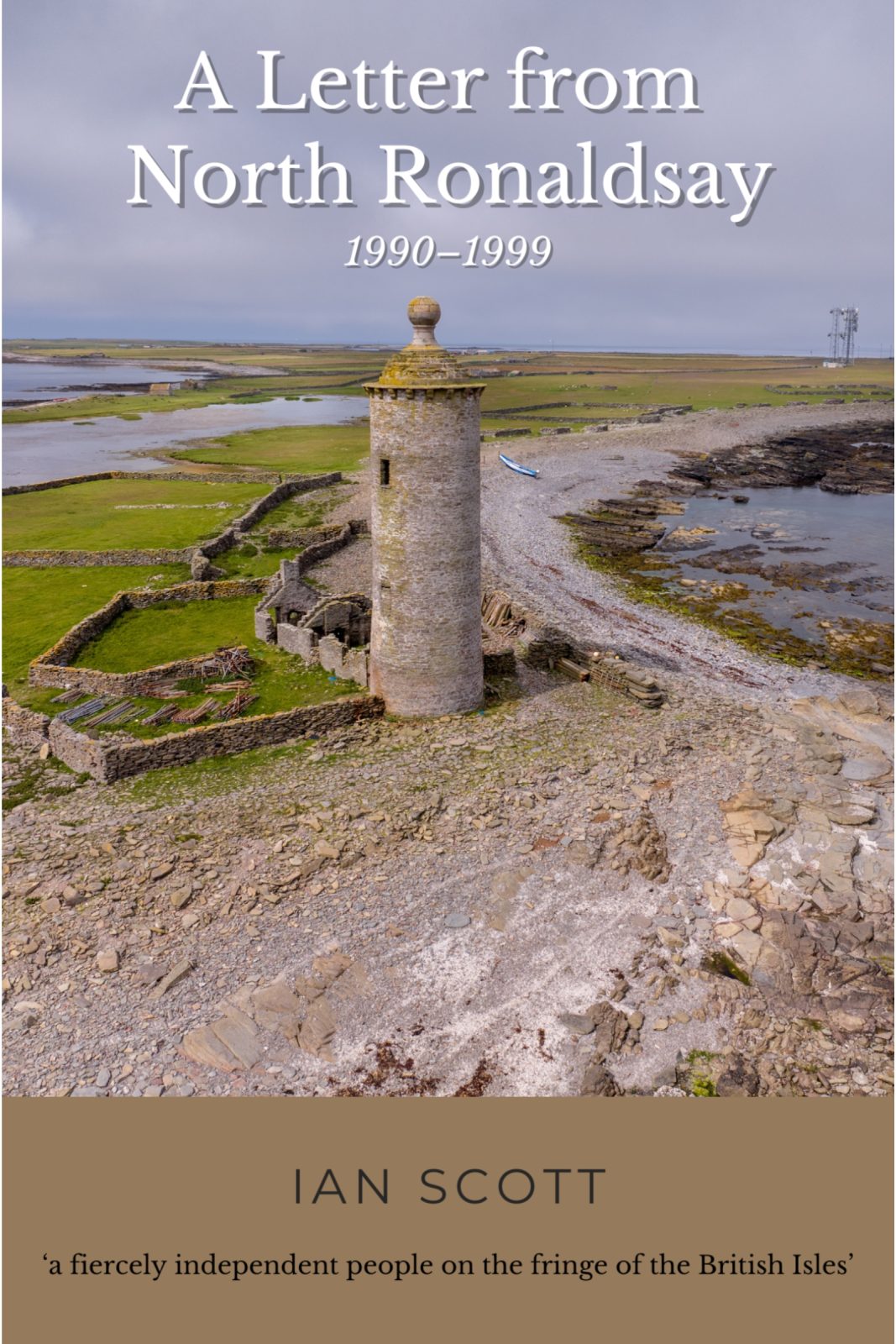
A Letter from North Ronaldsay 1990-1999 is published by Orkneyology Press and available direct from the publishers or from bookshops including The Orcadian Bookshop and Stromness Books and Prints.