On a sunny day in late autumn I saw in a Glasgow second-hand shop window a book with an interesting cover, an image of a mammoth in an icy landscape. It was Dance of the Tiger by Björn Kurtén. The story is set in Ice Age Europe 35,000 years ago, following the adventures of a young Cro-Magnon man, alone and wounded and rescued by a Neanderthal clan. The story of their meeting gave a fresh new dimension to something that had long been puzzling me.
In Orkney where I grew up, there was a pattern of behaviour among older people which played down individualism. A musician at a fireside gathering might, at a pause for supper, idly play on the fiddle as if checking the tuning, and if you ask out of curiosity what the tune is, he will dismiss it as “a mix of old bits of tunes”. That means much more: it’s a way of saying that it’s an original tune that he composed himself, which he would like you to hear; but it is built into him not to do anything that would look like self-promotion, hence the indirect way of letting you know about it.
Exactly the same pattern was found by Richard Lee among the !Kung people of the Kalahari. A successful hunter, returning from a kill, has to drift in to the fire and sit down in silence until someone asks him what he saw that day, to be told in reply something like: “Ah, I’m no good at hunting, I saw nothing at all … maybe just a tiny one.” “Then,” said Richard Lee’s informant, /Gaugo, “I smile to myself because I know he has killed something big.” Commenting, Richard Lee observes: “The correct demeanour for the successful hunter is modesty and understatement.”
A related pattern among older Orcadians was to avoid any sign of public emotion. The greatest superlative was “no’ bad” or “ower weel”. When my aunt was decorating her house, she had a long wait for the wallpaper, with a series of delays explained by the shop, and when wallpaper finally arrived it was the wrong type, which she was told was due to a mix-up in the orders for her and a lady in Stronsay. When she told me the story, I expected annoyance but she started to laugh and explained that she was thinking what the lady in Stronsay’s expression would be when she saw her wallpaper.
That pattern of laughing away a problem is also an old one, found for instance among the Inuit. There is the story of the Danish explorer Knud Rasmussen arriving at a settlement in 1922 at the end of winter, with the snow melting into mud and slush, and the ice-block walls of the houses melting as well, and the occupants cold and wet. He was surprised to find the occupants of the first house singing, and those in the next house playing cards and laughing. Commenting on the story, Ernest S. Burch Jr observes:
Eskimos thought it important to be happy. A happy person was considered a capable person, a reliable person – in short a good person; an unhappy one was thought to be deficient in some significant respect….
Actually, of course, Eskimos were no strangers to anger, fear, anxiety, frustration, pain and sorrow, but the extent to which these sentiments were allowed to be expressed varied significantly….
Anti-social sentiments such as anger, greed and frustration were not supposed to receive overt expression at all.”
Analysing the Iatmul people on the island of Bali, Gregory Bateson noted that they had deeply-entrenched social blocks against emotional intensity in public life. The reason was that any display of emotion might trigger further emotion from others, in the same way that other forms of reactive behaviour, such as boasting or aggression, disrupt a society that has to hold together. He noted systems to prevent or defuse conflict.
The principal hierarchical structures in the society – the caste system and the hierarchy of full citizens who are the village council – are rigid. There are no contexts in which one individual could conceivably compete with another for position in either of these systems.”
“Balinese culture includes definite techniques for dealing with quarrels. Two men who have quarrelled will go formally to the office of the local representative of the Rajah and will there register their quarrel, agreeing that whichever speaks to the other shall pay a fine or make an offering to the gods. Later, if the quarrel terminates, this contract may be formally nullified.”
We can expect patterns of behaviour like this to go back a long way. The early human hunting bands needed to collaborate to survive in hard conditions. They needed to damp down anything that could break their close-knit harmony. So patterns of behaviour would be deep-rooted in everyone, to defuse individualism and emotion. Bateson coined the word schismogenesis to describe what happens when a mutually reinforcing pattern of behaviour between two parties leads to conflict and social schism. He highlighted structures in society in Bali which acted to prevent schismogenetic behaviour from escalating.
So here we have clues to patterns of behaviour involving ego, emotion and conflict, and possible mechanisms in archaic societies to prevent it. And now we come to Dance of the Tiger, and particularly the scene early in the story when Tiger, a young Cro-Magnon man, is lying unconscious, trapped below a pine tree dislodged by a mammoth in a fury against hunters. A group of Neanderthals come across him and their leader, Miss Angelica, tackles the situation.
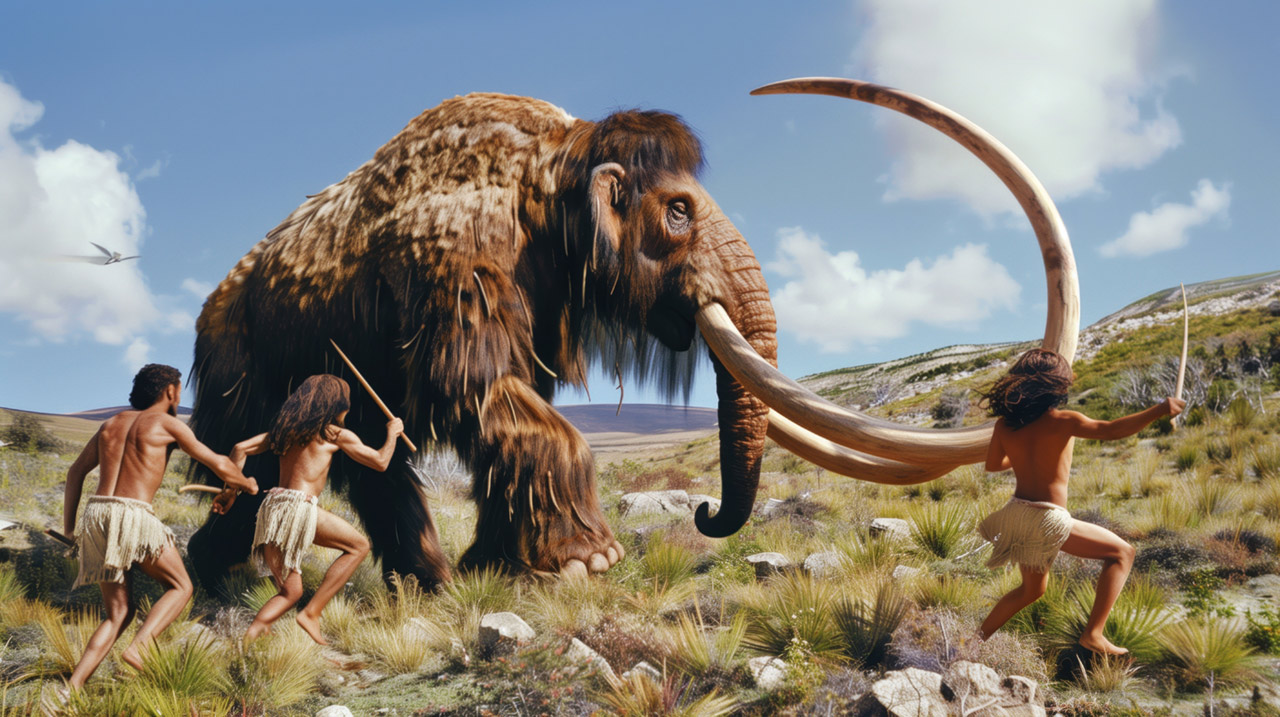
‘Would you be so gracious, Mister Silverbirch, and look at the young God? Can you tell us how badly he is hurt?’
The old man was already beside the boy. ‘We must get the tree off him, Miss Angelica,’ he said.
‘Please, Miss Woad, would you ask some of the men here to assist?’
‘With pleasure, Mother.’
Gently they lifted the tree and flung it aside, muttering, ‘Excuse me, Miss Woad,’ ‘Please, Mister Silverbirch,’ and other civilities. The tree had fallen on the boy’s legs, which were badly bruised and bleeding; the left leg had an ugly twist.
‘He is alive, Miss Angelica,’ said the old man. ‘His leg must be straightened out. I should like to have some plantain for the wounds, but we have to go back to the coast for that. I will need a strong stick and some straps. Then we must make a litter.’
You can see how logical it would be for a society, where cohesion was vital, to have such a structured way of speaking, with phrasing always in place to anticipate and avoid the slightest nuance of ordering others around. I can remember how an older Orcadian farmer might give an instruction to a farm servant to go and check on the cattle – “Would you maybe go over and take a look at the cattle?” The word maybe defuses the tone from an order to a request, playing down the difference between the two, as does the roundabout wording.
So it looks that various fragments of speech and behaviour patterns have survived within various places and cultures into the modern era. What Björn Kurtén did in Dance of the Tiger was to go back into the past and reconstruct so elegantly the thinking and behaviour of an ancient society in a way that totally rings true.
At the time that I came across the book I was working for the BBC in Glasgow, one of the team producing the daily Jimmy Mack Show, which on five days each week welcomed speakers on many subjects. Jimmy was a warm-hearted man, with a deep interest in people, and he very much liked the idea of a conversation with a Finnish paleontologist who had explored the world of Ice Age animals and their hunters. In the interview he particularly enjoyed Björn Kurtén’s story of a meal from long-dead frozen bison thawed out of the permafrost, and wondered how the cooking was done. “With onions!” was the reply.
When I contacted Professor Kurtén to arrange the interview, I asked him how he had come to his insight about the thinking of the Neanderthals, with their great care to treat each other with respect. It was, he said, because of the way that they had put flowers on their dead in Shanidar, in the cave in Iraq where pollen was found among human bones.
Some implications
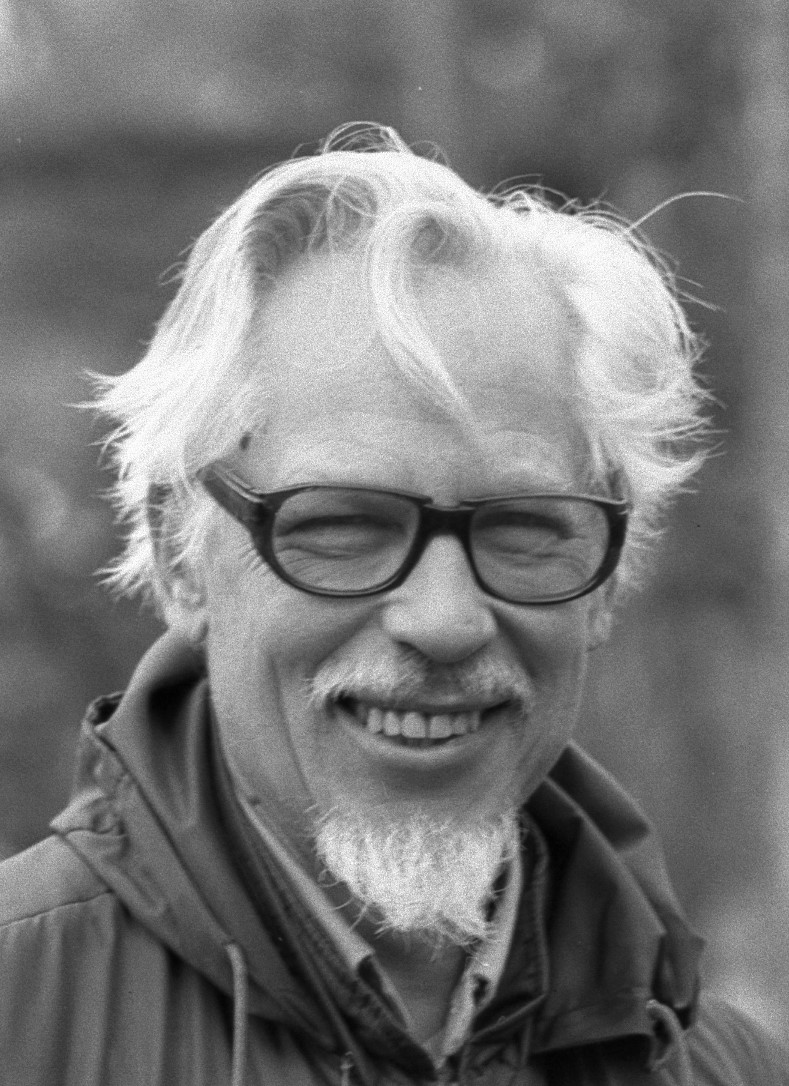
Björn Kurtén’s reconstruction of Neanderthal thought and behaviour patterns, amply supported by a range of evidence that I have only touched on here, makes him one of the pioneers in cognitive archaeology, and it has significant implications. First, it points to early human society, still too often dismissed today as ‘primitive’, being actually more sophisticated and nuanced than our own.
Secondly, when we realise that such behavioural structures once existed, their absence becomes ever more noticeable with each day’s news stories of human brutality, by individuals or groups or nations. While ancient societies had behavioural structures to damp down ego, emotion and aggression, the modern world has media – such as cinema films, newspapers, TV series, and the internet – that too often amplify all three. Compare for instance the situation of a footballer who has scored a goal with that of the !Kung hunter who has killed ‘something big’.
Thirdly, evolutionary biology, with an unspoken assumption that things are always getting generally better, sometimes plays down the complexities of ancient cultures in order to highlight the assumed superiority of those of today. So, for instance, Thomas Huxley maintained that life among early humans was such that
the weakest and stupidest went to the wall, while the toughest and shrewdest, those who were best fitted to cope with their circumstances, but not the best in any other sense, survived. Life was a continual free fight, and beyond the limited and temporary relations of the family, the Hobbesian war of each against all was the normal state of existence.”
That rather cavalier assertion, developed at a time of laissez-faire political thought, aimed at freeing industrialists and colonial powers alike from restriction, is based on not a scrap of evidence, but it has seeped into too much of our thinking today. Its thinking was satirically summed up in a magazine in the early 1960s as: “Life is a garden. Some of us are the flowers, and some of you are the weeds.” Much more real, and I am sure much closer to the truth about our deeper nature then and now, is the world of thoughtfulness and care depicted in such detail by Björn Kurtén. Here is a scene from the book where the Neanderthals are burying some of Tiger’s clan whose bodies they had also found, people who they had never met before and who seemed very strange, but who had to be cared for.
The dead Gods were then buried, each with a generous piece of smoked meat to sustain him on his journey to the Land of Dead Gods. For surely there must be such a place, just as there was a land for Dead Men. Big boulders were rolled down from the esker overlooking the bog and placed upon the graves to keep their contents safe. Finally, yellow loosestrife, red campion, and other flowers in season were scattered over the graves, and the dead were honored in an epic song by Mister Silverbirch, who made up a remarkable catalogue of their feats.”
I must say that if I had to live in an Ice Age landscape, I would prefer the company of Mister Silverbirch and Björn Kurtén to that of Thomas Huxley. And with those flowers for Tiger’s clan and that intricate structure of a society 35,000 years ago, I do believe that Björn Kurtén got brilliantly close to our ancestors and to essential aspects of being human, and that these patterns from the past can help us survive in our own world today.
Summary
To survive tens of thousands of years of hardship and threat, ancient human societies had to be able to act together in harmony, and to avoid internal conflict. Gregory Bateson gave examples of such structures that exist in particular archaic societies into modern times. From these patterns of behaviour that survive today, we can carefully and cautiously try to reconstruct the past, as we do with language, mythology and other areas of human thought. The existence of such deep-rooted structures does of course not mean that conflict could never have taken place within communities, and there are times when stable societies can break down, but the survival benefits of patterns of conflict-damping patterns of behaviour are clear. This provides support for the beautifully detailed picture of careful and courteous social interaction in Neanderthal society which Björn Kurtén created in his novel Dance of the Tiger.
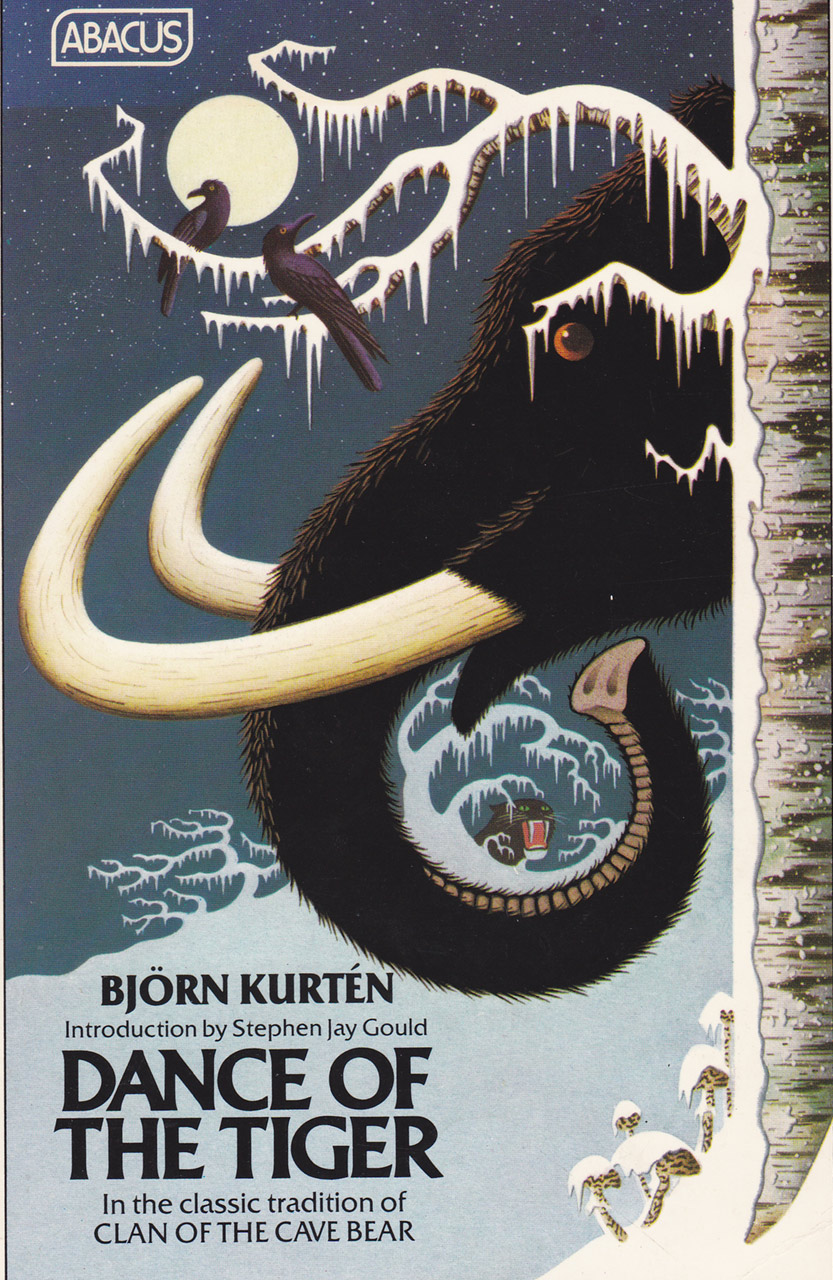
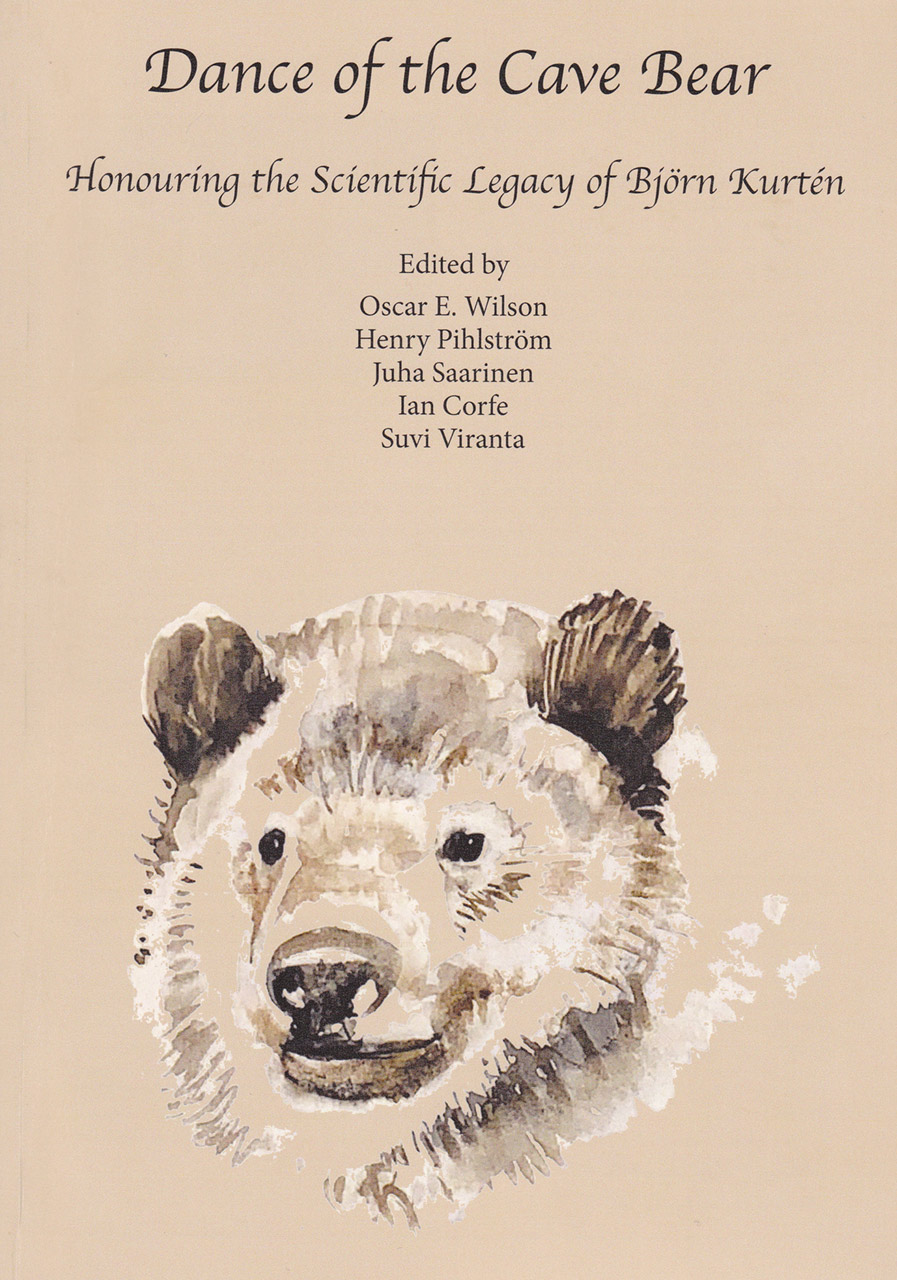
Published on 19 November 2024 in a special issue of the journal Annales Zoologici Fennici Vol. 61, titled Dance of the Cave Bear: Honouring the Scientific Legacy of Björn Kurtén, on the day which would have been his 100th birthday. This paper can be found there along with over twenty others covering cave bears and polar bears, remains of ancient horses and humans, and sites from the Arctic and the Baltic to China and South America. The Björn Kurtén Club was founded at the University of Helsinki to continue the tradition of bringing people together in the study of paleontology, and four of its members took part in an online presentation in the 2021 Orkney International Science Festival titled Trail of the Cave Bear, Dance of the Tiger. One of them Otto Stenberg, came in person to the 2024 Festival to give a Björn Kurtén Centenary Lecture on What Teeth Can Tell Us.