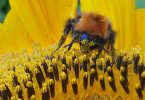

With the days now on the turn, here’s a look back to the sunshine of May, and the picture of spring that Elizabeth Woodcock painted at the time, amidst the continuing growth and life developing in the backyard which she turned into a garden.
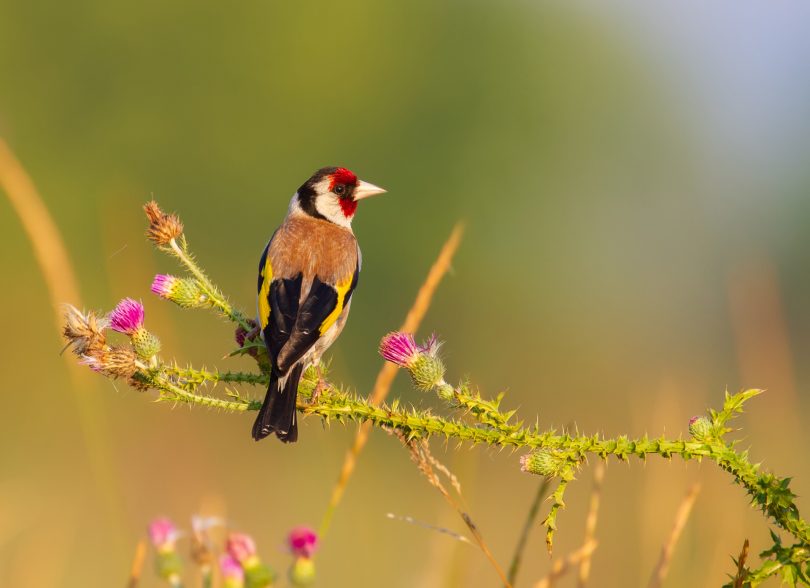
Goldfinches are regular visitors this year. Pairs arrive taking beakfuls of sheep wool, and there are two pairs of breeding blue tits. One is in the intentionally overgrown hawthorn hedge, and the late comers take the lowlier nest box. The small wicker pods I hung, full of dog hair and moss, are empty and the sheep’s wool has all been pulled out of the holes where it was stuffed. It’s a frenzied time of year, nest building season. The chattering, chirping, early morning comings and goings, and pond dipping, creates a hive of activity in a small, nature-reclaimed backyard.
A few years ago it was brick and concrete with no birds visiting, just fly overs. Sterile and still, no texture or movement, no life.
Creating habitat and a biodiverse setting in your garden with a variety of plants of different heights is vital in encouraging wildlife to return. And beneficial for your sense of well-being. Once creatures find you, it’s a great lesson in sharing. The pond is OK, I can share the pond, and the trees, even if the new buds are nipped off. But the vegetables …. When most sproutlings are scratched up by busy blackbirds, pecked by pigeons who scroll about like someone out on a Sunday walk, or devoured by slugs, the patience of an organic gardener is tested.
A time to dance
It’s the beginning of May, a time of richness, growth, and fertility for the coming year, where we once wove ourselves around May Poles in some fertility rite, and the Morris dancers played on, dancing with bells, cloths, and even swords. Now we don’t get involved in the merry maying or dancing so much, which is kind of a shame, don’t you think? Where we’d celebrate in nature, looking for a mate as nature was hooking up too.
Sharing is a vital part of this complex system. We share our time, visions, and produce, while our gardens give us beauty, food, a home and life. We return seeds to the earth and expect with great hope, a return. We plant much more than we need, to try to satiate all those other creatures who also want to join the feast, as we, the ‘owner’, get to decide who comes, who goes, who thrives and who dies. So making wise, long-term choices is vital.
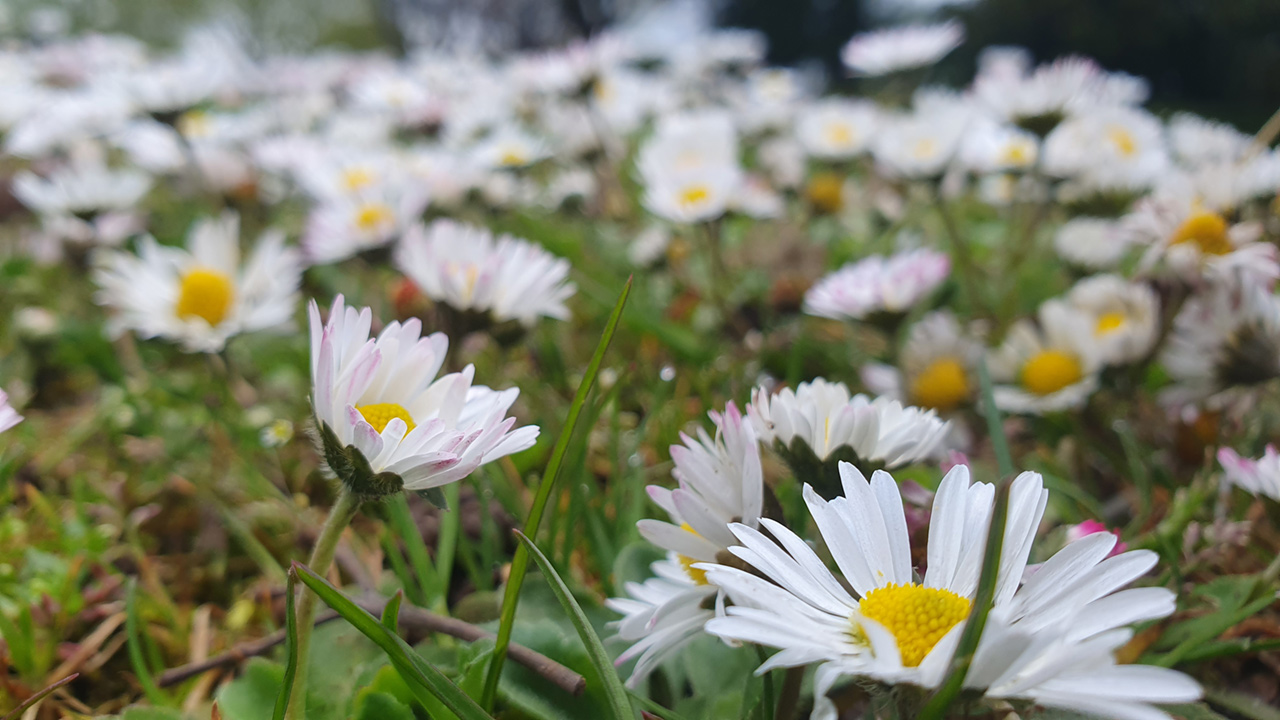
The charity Plantlife launched No Mow May in 2019 to try to hit back at 97% of our hay meadows being lost since the 1930s. The idea is for May, don’t cut your lawn, as it may have a seed bank and many wildflowers in it providing nectar for pollinators, and longer grass can provide habitat for creatures. With over 20 million gardens in the UK, we’re trying to re-establish a diverse habitat. You might want to leave some completely untouched grassy strips along hedgerows and fences to create effective ecological corridors along which wildlife can move. Variety is key for a wilder garden, so leave grasses at different heights. If you have laid turf, it’s unlikely you’ll have wildflower seeds in your lawn, but you can plant plug plants into it and begin turning it into a meadow.
But doesn’t it look ‘messy’ some ask? If you can alter your viewpoint and come to value the different textures and colours, see the benefit for wildlife, ‘messy’ is redefined to ‘life giving’.
A river of flowers
Eleven years ago Rotherham Council planted an eight-mile-long ‘River of Flowers’ on the central reservations of the town’s main ring road using wildflower seed mixes, and it is saving them £23,000 for each two-year cycle because they are no longer mowing every few weeks, but letting it all grow and bloom, creating a biodiverse haven.
And this week is also International Compost Awareness Week, running from Sunday 5th until Saturday 11th May. Composting is another great way to increase health to your garden and be responsible for your own waste. Check locally for events to inspire and help.
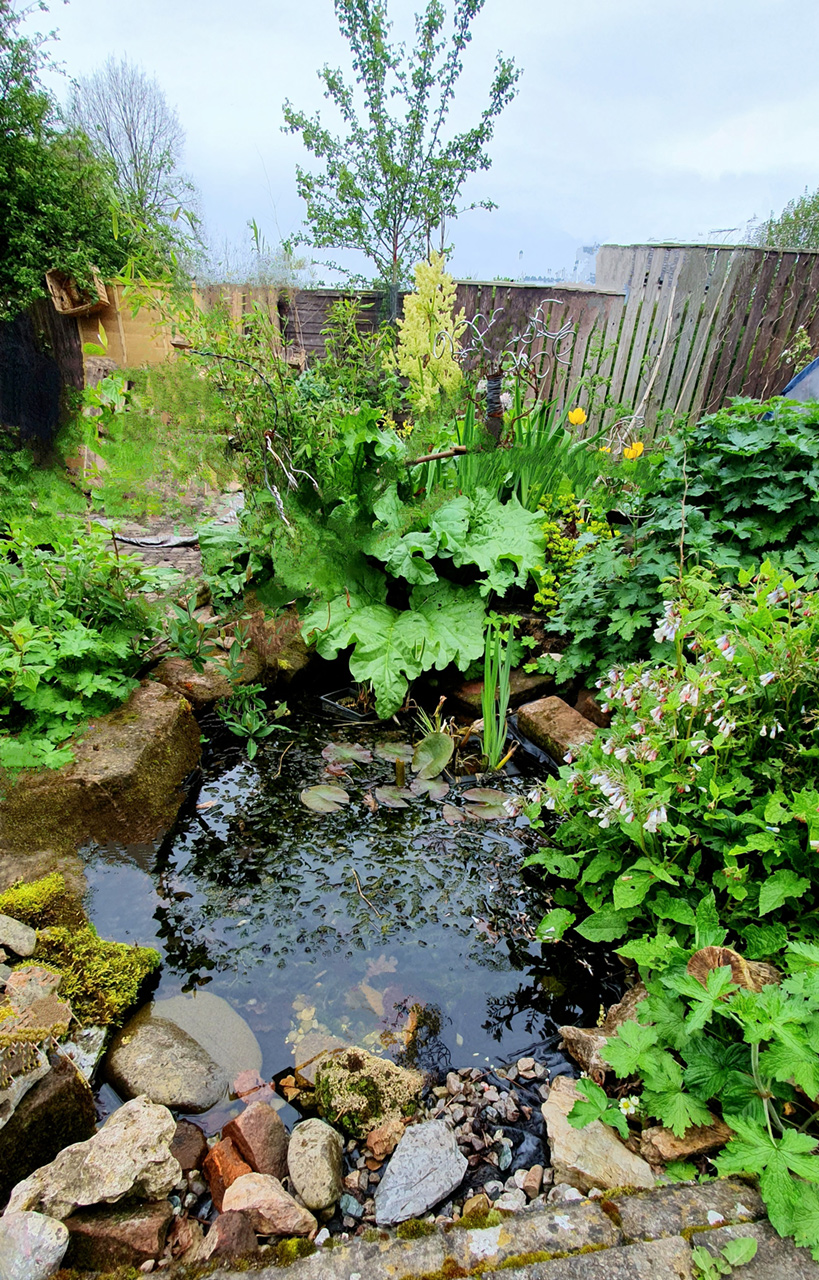
The sun is going down on this bank holiday and I’m sitting by my pond with a cup of tea. The bees are buzzing on the Iberian comfrey growing by the pond. The rhubarb is sprouting an enormous flower and the blue tits are perfecting the entrance hole to the nest box, with their peck-peck-pecking tapping out. And my lawn, will I mow it? I don’t have one, much to my daughter’s dislike. It’s all plants of many heights, creating a dense, urban jungle.